Prioritizing Cultural Heritage in the Asia-Pacific Region: Role of City Governments

1. Introduction: Why Heritage?The Asia-Pacific region is endowed with a vast and ancient cultural heritage that is more than 2000 years old. From the Indus Valley civilization in South Asia to the Chinese kingdoms and dynasties of East and Southeast Asia, ancient heritage has shaped much of the lives and value systems of the regions' peoples. There is a growing recognition that cultural heritage and its conservation is a shared responsibility of all levels of government, proponents, and members of a community. We are now gradually moving away from simply making an inventory of heritage resources, to an integrated and interlinked approach to heritage management. Heritage is more than a record of the past - it is becoming an integral part of the urban identity now, and for the future. Conserving this precious and ancient heritage has been a challenge to both governments as well as the civil society at large. This is particularly true for city governments that are in 'direct contact' with the manifestations of heritage at the local level. Cities have recognized that many of the old historic areas are in danger of being destroyed in the name of economic development and modernization. Many are indeed old cities that were seats of civilization for centuries - Delhi, Bangkok, Hue, Esfahan, Seoul, and Yangoon.
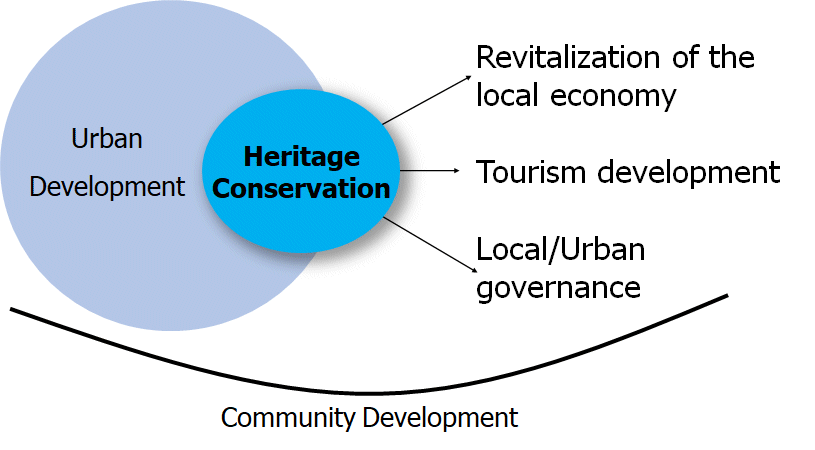
 The criticality of cultural heritage for cities stems from three sets of factors. Social factors include enhancement of a city's image and identity (and hence leading to its residents' pride in the city), and integration into day-to-day living and development of value systems for the community. Politico-economic factors are more easily understood, and involve the role of heritage in tourism (and hence in the local economy), and its archeological and historical importance. Finally, Planning factors - particularly applicable to architectural heritage - involves the reuse, redevelopment and regeneration of heritage objects to preserve and integrate them into the larger developmental process of the city as a whole. It is important, therefore, to place the issues of heritage conservation within the overall process of urban development, as well as interlink it with other issues such as tourism development, revitalization of the local economy and local governance. In responding to pressures for the future, inherent in its development pressures, economic conditions, and drive for modernization, it is vital not only to protect tourism resources, but also to promote community development that focuses on cultural landscapes.
 To highlight the importance of heritage conservation and the need to focus attention on the issues, opportunities to share experiences and lessons among cities and its partners need to be provided. Hue in Vietnam and Lille in France, for example, have committed to preserve the architectural resources of Hue. With the involvement of French and Vietnamese experts, five traditional houses in Hue have been selected for rehabilitation and work on one of them is now in progress. Once this project is completed, the house will function as an office as other rehabilitation projects are launched, models of sensitive preservation presented, and advise offered to other historic building owners throughout Vietnam. The three case studies presented below come from cities that have led the way in heritage conservation initiatives.
2. Kathmandu: Its the People's Heritage
The responsible local government - Kathmandu Municipal Corporation (KMC) - has clearly realized the need for integrating cultural heritage conservation into a broad process of community and citizen's participation. Two reasons are put forth, (1) the importance of community involvement for the success of any heritage initiative, and (2) the implications for civic pride and city-image building among citizens. Preservation of cultural heritage is directly linked with the city's economy, with tourism being a major activity. The medieval city integrates its population with the city's cultural and historical attributes. These, in terms of religion, rituals and cultural activities are the essence of the city's economic and physical form. They are closely integrated with life in the city. The compatibility of these elements with modernization needs to be tested, but its future lies in integration, rather than separation. Recognizing the importance of cultural heritage preservation and conservation, KMC established the Heritage and Tourism Department in 1997. KMC has been developing several strategies for heritage conservation, such as education and awareness programmes for an informed public, heritage tour for school children and media radio and television, encouraged responsible tourism, community participation, public-private partnerships, and financial incentives. KMC also encourages the local community to take on the responsibility of raising funds to support their own conservation activities. For example, the general public has agreed to donate 1,000 grams of gold for the renovation of the "Tukan Bahal". The lessons for local governments, emerging from the case of Katmandu, include:
3. Penang: Preserving for the Future
The town was established in 1786 upon acquiring the island of Penang from a local sultan, and is named after King George IV of England. Today, Georgetown is the capital of Penang, and the administrative and commercial hub of the state. In order to develop and sustain its unique urban identity, the city has focused on interlinking physical planning, a sound policy framework, and sensitive master plans to create an urban area that is sustainable and enduring for future generations. Penang has initiated studies and programmes that combine heritage conservation with the larger goal of local sustainability (for example, the 'Sustainable Penang' programme). It has also incorporated it into tourism plans and projects, enhancing its intrinsic value to the local economy, but more so to its future. The initiative's economic sustainability is ensured by partnerships with the private sector in building the tourism potential of Georgetown for visitors and residents alike. The lessons for local governments, emerging from the case of Penang, include:
4. Manila: Getting the Framework Right
But four centuries of misuse, war, lack of maintenance and pollution had taken its toll on Intramuros. The efforts in restoration and redevelopment of Intramuros started in 1965 to prevent further deterioration and incorporate it into the mainstream of urban development. The uniqueness of the efforts in preserving Intramuros lie in the setting up of a separate urban planning and development agency for the historic area - the Intramuros Administration (IA) - that is responsible for its redevelopment and restoration. IA derives its organizational support from not only the national government (Planning Board, dept. of Tourism), but also from the Metro Manila (Traffic management, infrastructure, waste collection, etc.).
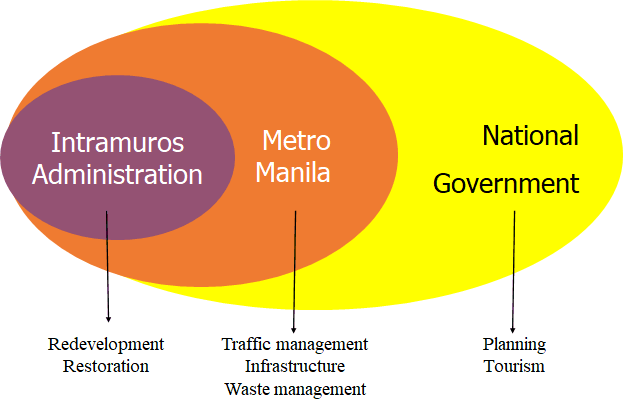 Along with the setting up of IA, other supportive measures and actions have also been taken - classifying Intramuros as a 'cultural zone', drawing up integrated master plans for the area, removal of inappropriate land-uses, design guidelines and urban streetscape rules for future development, restoration of historic buildings and structures, etc. The lessons for local governments, emerging from the case of Manila, include:
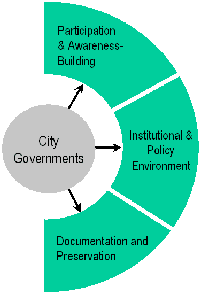
5. Heritage Conservation: The Three-pronged ApproachIn-depth analyses of the three case studies, and interviews and presentations of with city officials clearly point out the important lessons learnt for cultural heritage conservation and the role of city governments -
These three lessons are being presented here as a 'three-pronged approach' to heritage conservation:
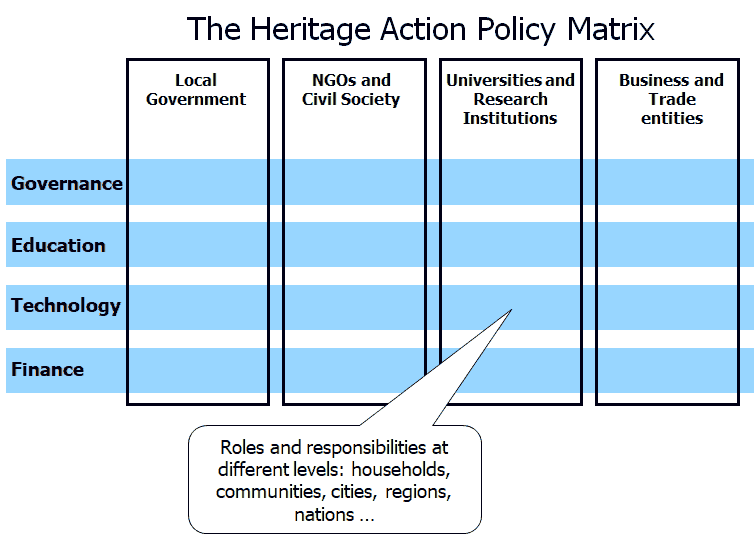 As illustrated in the figure above, the policies and strategies can be broight together into a matrix with
Each of the cells in the resulting matrix would then be filled up with localized and customized roles and responsiblities to develop and implement the needed action - essentially answering the questions, "Who has to what? Who has to support whom for which action? What preconditions and supporting policy environment is needed?"
In conclusion, the question here is no longer whether we need heritage conservation - the question is indeed how to prioritize heritage conservation as an important aspect of a city's overall development, and to set up an appropriate framework for its integration and implementation within existing systems of development and management.
|