Smartphones for Poverty Reduction:
Transforming Livelihoods, Services and Opportunities
Hari Srinivas Case Study Series E-267
Abstract:
Smartphones have emerged as one of the most significant Information and Communication Technologies (ICTs) for development in recent decades, offering new opportunities for poverty reduction and inclusive development across the world. By combining communication, internet connectivity, financial services, educational resources, and data access into a single portable device, smartphones have enabled low-income and marginalized populations to participate more actively in social and economic systems. Their growing affordability and widespread adoption have made smartphones powerful tools for improving access to banking, healthcare, education, agricultural information, employment opportunities, government services, and community networks.This overview examines eleven major ways in which smartphones are being used to support poverty reduction initiatives within the broader framework of ICTs for Development (ICT4D). These include financial inclusion, agricultural support services, digital learning, telemedicine, livelihood generation, women's empowerment, e-governance, disaster risk reduction, market access, community networking, and participatory data collection.
Keywords:
ICTs for Development (ICT4D), smartphones, poverty reduction, digital inclusion, mobile technology, sustainable development, financial inclusion, community empowerment
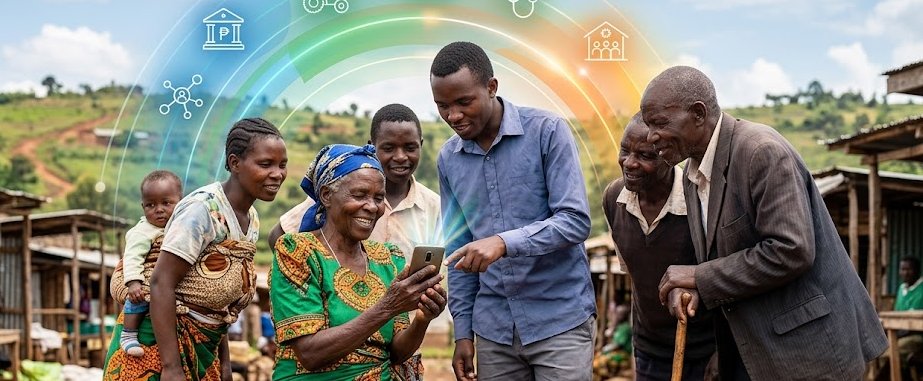
Smartphones have become one of the most important ICT tools for poverty reduction because they combine communication, information access, banking, education, and service delivery into a single low-cost device.Across developing countries, smartphones are helping poor communities improve livelihoods, reduce vulnerability, and access opportunities that were previously unavailable.
Introduction
Smartphones have emerged as one of the most powerful and accessible Information and Communication Technologies (ICTs) for development in the 21st century. Unlike earlier forms of digital infrastructure that required expensive equipment or fixed connectivity, smartphones combine communication, internet access, financial tools, educational resources, and data services into a single portable and relatively affordable device.Their rapid spread across developing countries has created new opportunities for addressing poverty, improving livelihoods, and expanding access to essential services among low-income and marginalized populations. The importance of smartphones for poverty reduction lies not only in the technology itself, but also in the wide range of functions that smartphones enable.
Farmers can access market information and weather forecasts, women can participate in digital financial systems, students can connect to learning resources, and communities can communicate rapidly during emergencies. Governments, civil society organizations, and development agencies increasingly use smartphones to deliver services, collect data, strengthen citizen participation, and improve transparency. In many communities, smartphones have become an essential gateway to economic participation and social inclusion.
Figure 1: Mindmap of issues - Smartphones for Development
(Clck image to enlarge)
Source: GDRC concept, diagram visualised with AI tools and edited by authorAt the same time, the use of smartphones for development reflects broader shifts toward digital societies and knowledge-based economies. Access to information is increasingly linked to access to opportunity. Smartphones reduce barriers created by geography, limited infrastructure, and institutional inefficiencies by connecting people directly to networks, services, and markets.
While important challenges remain - including affordability, connectivity gaps, digital literacy, and gender inequalities - smartphones are already transforming the way poverty reduction programmes are designed and implemented across the world.
📱 1. Mobile Banking and Financial Inclusion
Smartphones allow poor and unbanked populations to access financial services without needing a physical bank branch.Smartphones have revolutionized financial inclusion by bringing banking and financial services directly into the hands of low-income populations. In many developing countries, traditional banking infrastructure is either inaccessible or too expensive for poor households.
The rise of mobile finance has significantly reduced the vulnerability of poor households to economic shocks. Families can now receive emergency funds quickly, store money more safely than cash, and participate more actively in local economies.
Key Uses
- Mobile money transfers
- Digital savings accounts
- Microcredit and microinsurance
- Cashless payments
- Remittances from migrant workers
- Government cash transfers
Poverty Reduction Impact
- Reduces transaction costs
- Improves financial security
- Encourages savings
- Supports women entrepreneurs
- Expands access to formal finance
Kenya's M-PESA Mobile Money System
Kenya: M-PESA system is one of the world's best-known examples of smartphone-enabled poverty reduction. Introduced by Safaricom, M-PESA allows users to deposit, transfer, and withdraw money using mobile phones. The service became especially important in rural communities where bank branches were limited.
Mobile Cash Transfers in Sub-Saharan Africa
Rwanda: Many governments and humanitarian organizations across sub-Saharan Africa use smartphones and mobile money systems to distribute welfare payments and emergency assistance directly to beneficiaries.
Digital Banking Platforms for Rural Women in India
India: In India, smartphone-based banking applications have enabled rural women to participate more fully in the financial system through self-help groups, digital payments, and microfinance systems.
📱 2. Agricultural Information Services
Smartphones help farmers gain access to real-time information that improves productivity and income.Agriculture remains the primary source of livelihood for millions of poor households worldwide, yet small farmers often lack access to timely and accurate information. Smartphones help bridge this information gap by delivering weather forecasts, market prices, farming techniques, pest alerts, and agricultural advisory services directly to farmers. These services improve decision-making and reduce risks associated with farming.Access to agricultural information through smartphones strengthens food security and rural incomes. Farmers can better plan planting schedules, negotiate fairer prices, reduce crop losses, and respond more effectively to climate variability. Smartphones also strengthen connections between farmers, agricultural experts, cooperatives, and markets, helping rural communities become more resilient and productive.
Key Uses
- Weather forecasts
- Market price information
- Pest and disease alerts
- Soil management advice
- Crop planning tools
- Livestock management support
- Agricultural extension services
Poverty Reduction Impact
- Improves crop yields
- Reduces information asymmetry
- Increases bargaining power
- Lowers farming risks
- Helps farmers access better markets
Mobile Advisory Services in India and Kenya
Community Knowledge Workers in Uganda
Uganda: Uganda's Community Knowledge Worker initiative equips local agricultural workers with smartphones loaded with farming information and data collection tools. These workers visit villages to provide advice on crop production, livestock management, and climate adaptation strategies. Smartphones allow them to access updated information in real time and share local data with agricultural agencies. The programme has strengthened communication between farmers and extension services while improving rural productivity.
SMS and Voice-Based Agricultural Extension Systems
Bangladesh: In areas with low literacy rates or limited internet access, voice-based and SMS agricultural systems have become valuable tools for poverty reduction. Farmers can receive weather alerts, market prices, and planting advice through simple mobile communication channels. Such systems are particularly important for older farmers and remote communities that may not have access to advanced digital infrastructure. Even basic smartphone connectivity has helped farmers make more informed economic decisions.
📱 3. Education and Digital Learning
Smartphones are increasingly used as low-cost learning platforms for poor and remote communities.Smartphones have emerged as powerful tools for expanding educational access in low-income and remote communities. For many learners, especially in rural areas, smartphones provide the first direct connection to digital learning materials, online courses, educational videos, and communication with teachers. Because smartphones are relatively affordable and portable, they have become an important bridge for reducing educational inequality.Mobile learning is especially valuable where schools face shortages of textbooks, qualified teachers, or physical infrastructure. Smartphones support flexible learning opportunities for youth, adult learners, and working populations. They also help students continue learning during crises such as natural disasters or pandemics when normal schooling is disrupted.
Key Uses
- Mobile learning apps
- Access to online courses
- Language learning
- Digital libraries
- Educational videos
- Exam preparation tools
- Teacher training
Poverty Reduction Impact
- Expands educational access
- Supports lifelong learning
- Improves digital literacy
- Reduces rural education gaps
- Enables flexible learning for working youth
Rural E-Learning Projects in Cambodia and Africa
Cambodia: Several rural education initiatives in Cambodia and African countries distribute smartphones or provide community access to mobile learning platforms. Students use educational apps, recorded lessons, and digital reading materials to supplement classroom learning. In communities where schools are under-resourced, smartphones help expand access to quality educational content and improve student engagement.
Offline Learning Apps for Low-Connectivity Areas
Nepal: In many remote areas, internet connectivity remains unreliable or expensive. To address this challenge, organizations have developed offline learning applications that can be downloaded once and used without continuous internet access. These apps often include videos, quizzes, and interactive lessons in local languages. Such systems have enabled students in isolated communities to continue learning despite digital infrastructure limitations.
Smartphone-Based Community Education Systems
Ethiopia: Community education programmes increasingly use smartphones for adult literacy training, vocational education, and public awareness campaigns. In some cases, local learning centers use smartphones to share educational resources among groups of learners. These systems are particularly valuable for women, migrant workers, and marginalized populations who may not have access to formal education institutions.
📱 4. Health and Telemedicine
Smartphones are transforming healthcare access in low-income and remote areas.Smartphones are transforming healthcare delivery by making health information and medical services more accessible to underserved populations. In many low-income and rural areas, people must travel long distances to reach clinics or hospitals. Smartphones reduce this barrier by supporting telemedicine consultations, health monitoring, appointment reminders, and public health messaging.Mobile health services also strengthen preventive healthcare by improving awareness of nutrition, maternal health, vaccinations, sanitation, and disease prevention. During health emergencies, smartphones help governments and health organizations rapidly communicate with communities and monitor disease outbreaks.
Key Uses
- Telemedicine consultations
- Maternal health reminders
- Vaccination alerts
- Disease monitoring
- Mobile diagnostic tools
- Health education
- Emergency communication
Poverty Reduction Impact
- Reduces healthcare travel costs
- Improves preventive care
- Supports early diagnosis
- Expands rural healthcare access
- Improves maternal and child health
Mobile Health Systems in Africa
Disease Surveillance Using Mobile Networks
Guinea: Smartphones have become important tools for disease surveillance and epidemic monitoring. Health workers can rapidly report suspected disease outbreaks using mobile applications, allowing governments to respond more quickly to public health threats. During outbreaks such as Ebola and COVID-19, smartphone-based reporting systems helped authorities track infections and coordinate response measures.
Community Health Worker Apps
📱 5. Employment and Livelihood Opportunities
Smartphones help poor populations connect to income opportunities and labor markets.Smartphones have expanded access to employment opportunities by connecting people to labor markets, digital platforms, and business networks. For many low-income populations, smartphones serve as essential tools for finding work, marketing products, communicating with customers, and managing small enterprises.The growth of digital economies has created new livelihood opportunities even in remote or marginalized communities. Smartphones reduce barriers to entrepreneurship by enabling low-cost access to advertising, digital payments, and online marketplaces. Informal workers and small business owners can now reach broader customer bases and improve income generation.
Key Uses
- Job search platforms
- Gig economy work
- Freelancing opportunities
- Online marketplaces
- Mobile entrepreneurship
- Small business promotion
- Digital skills training
Poverty Reduction Impact
- Expands access to work
- Supports self-employment
- Reduces job search costs
- Creates rural business opportunities
- Helps informal workers access markets
Digital Marketplaces for Artisans and Farmers
Peru: Small producers increasingly use smartphones to market handicrafts, agricultural products, and locally made goods through social media and digital marketplaces. This direct access to consumers helps reduce dependence on intermediaries and allows producers to retain a greater share of profits. In some communities, digital marketing has revived traditional crafts and supported local economic development.
Mobile-Based Service Work
Indonesia: Smartphones have enabled the expansion of mobile-based service work such as delivery services, transportation coordination, repair services, and home-based enterprises. Workers use apps and messaging platforms to connect with clients and manage business activities. These opportunities are particularly important for urban youth and informal sector workers seeking flexible income sources.
Online Micro-Enterprises Run Through Smartphones
Philippines: Many small entrepreneurs operate entire businesses through smartphones, using them for communication, inventory management, mobile banking, and customer engagement. Examples include home-based food businesses, tutoring services, tailoring operations, and local retail enterprises. Smartphones reduce startup costs and make entrepreneurship more accessible for low-income households.
📱 6. Women's Empowerment and Gender Inclusion
Smartphones are increasingly being used to empower women economically and socially.Smartphones are increasingly playing a transformative role in improving the lives of women in low-income communities. In many parts of the world, women face barriers related to mobility, financial access, education, employment, and participation in public life. Smartphones help reduce these barriers by providing direct access to information, communication tools, financial services, educational opportunities, and support networks.The use of smartphones by women has important ripple effects across households and communities. Increased access to digital tools often leads to improved financial independence, better health and education outcomes for children, and stronger participation in local decision-making processes. Smartphones also provide women with safer and more flexible ways to engage in economic activities while balancing family responsibilities.
Key Uses
- Digital financial literacy
- Women's self-help group coordination
- Mobile savings groups
- Access to government schemes
- Entrepreneurial training
- Health and nutrition information
Poverty Reduction Impact
- Enhances women's economic participation
- Increases financial autonomy
- Reduces information barriers
- Improves household decision-making
- Supports social inclusion
Smartphone Distribution Programmes for Ultra-Poor Women in India
Women's Digital Livelihood Training Initiatives
Mobile Savings and Self-Help Group Networks
📱 7. Access to Government Services
Smartphones allow citizens to interact with government systems more easily.Smartphones are helping governments improve the delivery of public services, especially for poor and marginalized populations. Traditionally, accessing government services often required long travel distances, complicated paperwork, and significant waiting times. Smartphone-based systems simplify these processes by allowing citizens to interact directly with government agencies through digital platforms.Digital access to government services increases transparency, reduces opportunities for corruption, and improves administrative efficiency. Smartphones also make it easier for vulnerable populations to access welfare programmes, health services, identification systems, and emergency support. In many developing countries, mobile governance has become a central component of digital inclusion strategies.
Key Uses
- Digital identity systems
- Welfare registration
- E-governance services
- Mobile tax and payment systems
- Public grievance reporting
- Disaster alerts
Poverty Reduction Impact
- Reduces corruption
- Improves service delivery
- Increases transparency
- Helps marginalized groups access entitlements
- Saves time and travel costs
Mobile Access to Social Protection Schemes
Brazil: Governments increasingly use smartphones to deliver information and access to social protection programmes such as food subsidies, pension schemes, unemployment assistance, and healthcare benefits. Beneficiaries can check eligibility, receive updates, and submit applications through mobile platforms. This reduces administrative barriers and helps ensure that support reaches intended recipients more efficiently.
Digital Identity and E-Governance Platforms
Estonia: Smartphone-based digital identity systems allow citizens to access a range of public services securely and conveniently. In countries such as India, digital identity programmes linked with smartphones have enabled millions of people to access banking, welfare payments, and official documentation. These systems reduce duplication, improve service coordination, and support financial inclusion among low-income populations.
Public Grievance and Community Reporting Systems
South Africa: Some governments and municipalities use smartphone applications that allow citizens to report local problems such as water shortages, damaged infrastructure, waste management issues, or corruption. These reporting systems strengthen citizen participation and improve accountability. Poor communities, which are often underserved by traditional administrative systems, can use smartphones to communicate concerns directly to authorities.
📱 8. Disaster Risk Reduction and Climate Resilience
Smartphones are important tools for vulnerable communities facing environmental risks.Poor communities are often the most vulnerable to disasters such as floods, cyclones, droughts, earthquakes, and heatwaves. Smartphones have become important tools for disaster preparedness, emergency communication, and climate adaptation. Through early warning systems and rapid information sharing, smartphones help communities respond more effectively to environmental risks.Smartphones also support long-term climate resilience by improving access to weather forecasts, environmental monitoring, and recovery assistance. Governments, humanitarian organizations, and local communities increasingly integrate mobile technologies into disaster management strategies to reduce losses and strengthen resilience among vulnerable populations.
Key Uses
- Early warning systems
- Flood and cyclone alerts
- Emergency coordination
- Climate advisories
- Community mapping
- Relief coordination
Poverty Reduction Impact
- Reduces disaster losses
- Improves preparedness
- Supports faster recovery
- Protects livelihoods
Mobile Warning Systems for Coastal Communities
Emergency Communication Networks During Disasters
Japan: During earthquakes, floods, and other emergencies, smartphones often become critical communication tools for affected populations. Relief agencies use mobile platforms to coordinate rescue operations, distribute information, and locate vulnerable individuals. In some disaster situations, community groups use messaging applications to organize local support efforts and share real-time updates.
Climate Advisory Services for Farmers
Tanzania: Many agricultural communities now receive climate-related information through smartphone services that provide rainfall forecasts, drought warnings, and seasonal climate predictions. These advisories help farmers adapt planting schedules, manage water resources, and prepare for climate variability. Such services are increasingly important as climate change creates greater uncertainty for rural livelihoods.
📱 9. Market Access and E-Commerce
Smartphones help small producers and entrepreneurs connect directly with buyers.Smartphones are expanding market access for small producers, entrepreneurs, and informal workers by connecting them directly with buyers and consumers. Traditionally, poor producers often depended on intermediaries who controlled prices and market information. Smartphone-based platforms reduce these barriers and create more direct economic relationships.Digital marketplaces also help small businesses increase visibility, manage transactions, and coordinate deliveries more efficiently. Even low-income entrepreneurs can now participate in local, national, and international markets using relatively affordable smartphone technologies. This expansion of market access contributes to income diversification and local economic development.
Key Uses
- Digital marketplaces
- Social commerce
- Mobile ordering systems
- Price comparison
- Delivery coordination
Poverty Reduction Impact
- Reduces dependence on middlemen
- Improves profits
- Expands customer reach
- Supports local enterprises
Farmers Selling Produce Through Mobile Platforms
Artisans Marketing Products Online
Morocco: Traditional artisans and craftspeople use smartphones to showcase products through online marketplaces and social media channels. Handmade textiles, pottery, jewelry, and cultural products can now reach customers far beyond local communities. This digital exposure has helped preserve traditional crafts while creating new income opportunities for rural and indigenous communities.
Mobile Ordering and Delivery Systems for Small Businesses
📱 10. Community Networking and Social Capital
Smartphones strengthen communication and social support systems.Smartphones strengthen community connections by improving communication, information sharing, and collective organization. In many low-income communities, social networks are essential for coping with economic hardship, accessing resources, and responding to emergencies. Smartphones make it easier for people to maintain these networks and organize community activities.Digital communication tools also support peer learning, local problem-solving, and social cooperation. Communities can rapidly exchange information about employment opportunities, public services, market conditions, and disaster risks. Stronger communication networks contribute to social resilience and collective action.
Key Uses
- Messaging groups
- Community organizing
- Peer learning networks
- Social support coordination
- Information sharing
Poverty Reduction Impact
- Builds social resilience
- Enhances knowledge sharing
- Improves collective action
- Supports mutual aid systems
Farmer WhatsApp Groups
Women's Cooperative Communication Networks
Sri Lanka: Women's cooperatives increasingly use smartphones to coordinate activities, organize meetings, manage finances, and share business opportunities. Messaging platforms improve communication among members who may live far apart or have limited mobility. These digital networks strengthen solidarity and improve organizational efficiency within community groups.
Community Alert and Mutual Aid Systems
📱 11. Data Collection and Citizen Participation
Smartphones enable communities to contribute data and participate in development processes.Smartphones have become valuable tools for collecting local data and increasing citizen participation in development processes. Governments, researchers, and civil society organizations use smartphones to gather information quickly and efficiently from communities. At the same time, citizens themselves can use smartphones to report local problems, contribute knowledge, and participate in planning processes.Participatory data collection improves transparency, accountability, and evidence-based decision-making. Smartphones also help amplify the voices of marginalized groups by making it easier to document community needs and communicate with authorities. This contributes to more inclusive and responsive development planning.
Key Uses
- Citizen reporting
- Participatory mapping
- Crowdsourced monitoring
- Local surveys
- Community feedback systems
Poverty Reduction Impact
- Improves accountability
- Enhances participatory governance
- Supports evidence-based planning
- Amplifies marginalized voices
Mobile Reporting Systems in Uganda
Participatory Mapping and Community Surveys
Public Health and Agricultural Monitoring Tools
Emerging Areas
The role of smartphones in poverty reduction continues to expand as new forms of digital innovation emerge across developing countries. Smartphones are increasingly being integrated into sectors such as agriculture, renewable energy, healthcare, education, local governance, and community development.Mobile technologies now support smart village initiatives, digital cooperatives, local environmental monitoring, and decentralized service delivery systems. In many communities, smartphones are becoming central platforms for communication, financial management, learning, and local entrepreneurship, helping people participate more actively in social and economic life.
Another important trend is the growing development of more accessible and localized mobile applications. Voice-based interfaces, local language content, and simplified mobile services are helping populations with limited literacy or technical skills use smartphones more effectively.
Smartphones are also supporting new forms of community networking, digital marketplaces, and climate adaptation services. As mobile connectivity improves and smartphone costs continue to fall, these technologies are likely to play an even greater role in supporting inclusive development and expanding opportunities for vulnerable populations.
Key Challenges and Limitations
Despite their growing importance, smartphones are not equally accessible to all populations. Many low-income households still face challenges related to the affordability of devices, internet access costs, unreliable electricity supply, and weak mobile network coverage.Rural communities, remote regions, elderly populations, and marginalized social groups often experience lower levels of digital access and digital literacy. Gender disparities also remain significant in many countries, where women may have less access to smartphones, financial resources, and opportunities for digital skills training.
There are also broader concerns related to cybersecurity, misinformation, data privacy, and dependence on digital systems that require stable infrastructure and institutional support. As smartphones become increasingly important for banking, education, healthcare, and public services, ensuring safe and responsible use becomes more critical.
Governments, civil society organizations, and development agencies will need to invest in affordable connectivity, digital literacy programmes, localized applications, and inclusive digital policies to ensure that smartphone-based development benefits are shared more equitably across society.
Way Forward
The future role of smartphones in poverty reduction is likely to expand significantly as mobile connectivity becomes more widespread and digital ecosystems continue to evolve. Improvements in mobile internet coverage, lower device costs, stronger digital payment systems, and localized applications will allow smartphones to reach even more underserved populations.Greater integration between smartphones and sectors such as agriculture, healthcare, education, governance, and disaster management will further strengthen their role as platforms for inclusive development. The increasing use of local language interfaces, voice-based systems, and accessible applications will also help reduce barriers for populations with limited literacy or technical skills.
Moving forward, the effectiveness of smartphone-based development initiatives will depend not only on technological innovation, but also on inclusive policies and institutional support. Governments and development organizations will need to invest in affordable connectivity, digital literacy programmes, data protection systems, and community-based training to ensure that vulnerable groups are not left behind.
Special attention will be needed to address rural-urban divides, gender disparities, and unequal access to digital infrastructure. If supported by equitable and people-centered policies, smartphones can continue to serve as powerful tools for empowering communities, strengthening resilience, and advancing sustainable and inclusive development worldwide.
This work by GDRC is licensed under a Creative Commons Attribution-ShareAlike 4.0 International License. You are free to share and adapt this piece of work for your own purposes, as long as it is appropriately cited. More info: http://creativecommons.org/licenses/by-sa/4.0/
on


Return to ICTs for Development
Contact: Hari Srinivas - [email protected]