Why View Oceans, Coasts, and Small Islands
as One Continuum?
 |
Hari Srinivas |
|
Explainer Series E-241
|
Abstract:
Rapid urbanization, will lead to more coastal megacities of 10 million or more people. By the year 2000, 13 out of 15 of the world's largest cities will lie on or near coasts. As coastal zones become more densely populated, coastal water quality will suffer, wildlife will be displaced, and shorelines will erode. (OCEAN'98 Website).
Man's relation with the ocean has been characterized by an 'out-of-sight-out-of-mind' attitude. But no matter what we do to it, or don't, the oceans will always be there. Almost all of earth's water is there, along with most of its living creatures, both in terms of biomass and genetic diversity. The Ocean is what makes the earth livable - it powers the climate and weather, shapes planetary chemistry, regulates temperature and is in sum, the foundation of earth's life support.
What is it about oceans that is critical? How does it affect us and how do we affect the oceans? What do we need to know and do to protect the oceans? The objective of this programme on Oceans, Coasts and Small Islands is to raise awareness of the problems that oceans and its various ecosystems face, and understand the urban interface with oceans. Policy options, for governments, for NGOs and for the general public, are also presented.
Keywords:
Oceans, Coasts, Small Islands, Continuum, Ecosystem-based management, Climate change, Resilience, Sustainable development
|
|
We need to recognize and actively manage the ocean-coast-island continuum as a single, interdependent system to ensure the resilience and sustainable future of these critical environments and the communities they support.
|
Oceans, coasts, and small islands must be viewed not as separate geographic or ecological entities, but as a single, deeply interlinked continuum of ecological and socio-economic systems. This integrated perspective is crucial because the health, stability, and future of each component are fundamentally dependent on the others, creating a constant, dynamic flow of interactions.
Interdependent Ecological and Socio-Economic Links
The relationship among these three realms is defined by a continuous exchange of energy, nutrients, species, and human activity.
The Ocean's Life-Supporting Role:
The vast ocean acts as the primary life-support system. It regulates the global climate by absorbing carbon dioxide and distributing heat across the planet. Crucially, it drives the hydrological cycle, generates oxygen, and supports the immense marine biodiversity that is the foundation for coastal and island life. It underpins global fisheries, providing essential protein and economic stability to communities, while its sheer volume offers a vital buffering capacity against coastal erosion and the impacts of large-scale weather events.
Coasts as Critical Transition Zones:
Coasts are the highly productive, complex transition zones where marine and terrestrial systems meet. They include critical habitats like mangrove forests, coral reefs, estuaries, and salt marshes . These ecosystems act as natural filters, purifying runoff water before it enters the sea, and serve as nurseries and feeding grounds for a vast array of marine species, thereby supporting the ocean's productivity. Socio-economically, coasts are where the majority of the world's population lives, concentrating human activity, infrastructure, and reliance on marine resources.
Islands as Integrated Microcosms:
Small islands (often referred to as Small Island Developing States or SIDS) represent the most visible and vulnerable intersection of this continuum. Their limited land mass, extensive coastlines, and often high dependence on marine tourism and fisheries mean the interactions between land, sea, and people are compressed and intensified. The stability of the island's terrestrial environment and the well-being of its population are immediately and directly threatened by changes in the ocean and coastal zones, such as sea-level rise and coral bleaching.
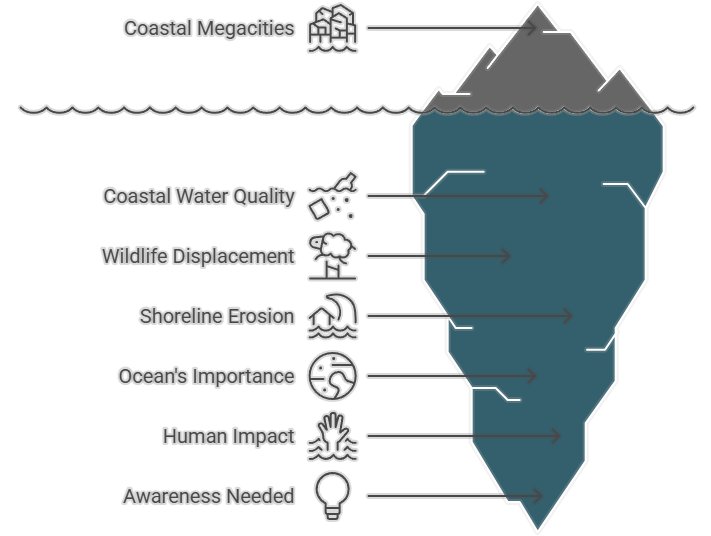 Figure 1: The Hidden Challenges of managing oceans, coasts and small islands
The Imperative for Integrated Management
Managing these environments in isolation is a risky practice that leads to fragmented policies and the failure to account for these vital flows and connections. For example, terrestrial pollution originating far inland can flow down rivers, impacting coastal estuaries and ultimately devastating offshore coral reefs.
- Addressing Shared Challenges: Recognizing the continuum enables the effective addressing of shared challenges that transcend arbitrary boundaries, including marine pollution (e.g., plastic waste), habitat loss, unsustainable resource extraction, and the multifaceted impacts of climate change.
- Strengthening Ecosystem-Based Management: An integrated approach naturally leads to ecosystem-based management (EBM), which considers the whole system rather than managing individual sectors (like fisheries or tourism) or isolated areas. This holistic view enhances ecological resilience, allowing the system to better cope with shocks.
- Supporting Sustainable Development: Ultimately, viewing oceans, coasts, and islands together strengthens global and national efforts toward sustainable development. It supports the livelihoods of coastal and island communities, ensures food security, and protects the natural capital upon which their long-term socio-economic prosperity depends. This unified perspective is a prerequisite for effective climate adaptation and preservation of these invaluable, interconnected resources.
Policy Implication
|
Managing these environments in isolation risks overlooking the flows of energy, nutrients, species, and human activity that connect them.
Integrated approaches that recognize the ocean-coast-island continuum can better address shared challenges such as pollution, habitat loss, climate change, and unsustainable resource use.
|
Recognizing the ocean-coast-island continuum as a single, interdependent system demands a fundamental shift in policy thinking and institutional coordination. Policymakers must move beyond fragmented sectoral frameworks that separately govern fisheries, coastal development, marine conservation, and land-based pollution control. Instead, governance mechanisms need to be integrated across ecological and administrative boundaries, guided by the principles of ecosystem-based management and the precautionary approach.
This includes strengthening cross-sectoral coordination among ministries, establishing shared data and monitoring systems, and creating platforms that enable the participation of local communities, scientists, and private actors. Integrated coastal zone management (ICZM), marine spatial planning (MSP), and transboundary cooperation among island and coastal states provide practical policy tools to operationalize this continuum perspective.
At the same time, policy attention must prioritize resilience building and equitable development outcomes. Coastal and island communities are often on the frontline of environmental change, yet have limited adaptive capacity. Policies should therefore combine conservation with livelihood diversification, climate adaptation, and disaster risk reduction.
Financing mechanisms such as blue economy strategies, payments for ecosystem services, and nature-based solutions can align economic incentives with ecological integrity. Embedding the ocean-coast-island continuum into national and regional planning frameworks will ensure that environmental, social, and economic objectives reinforce one another, safeguarding both the ecosystems themselves and the human well-being they sustain.
|