Why Sustainability is the New Bottom Line:
|
|||||||||||||||||||||||||||||
 |
Hari Srinivas |
| Policy Analysis Series E-240 |

|
Abstract: Sustainability has evolved from a peripheral corporate concern into the new bottom line for business success. This document argues that embracing sustainability is not merely an ethical choice but a strategic imperative that strengthens competitiveness and long-term resilience. Drawing on corporate sustainability and ESG practices worldwide, it presents a framework built on three interlinked pillars - Reputation, Profit, and Growth - that together form a self-reinforcing cycle of value creation. A commitment to sustainability enhances reputation by building trust and stakeholder loyalty, improves profitability through efficiency and risk reduction, and drives growth by fostering innovation and opening new markets. Far from being a trade-off, sustainability now defines how modern businesses operate, adapt, and thrive in an economy increasingly shaped by environmental limits and social expectations. |
|
Keywords: sustainability, corporate strategy, ESG, reputation, profitability, innovation, business growth, stakeholder trust |
TThe business world is changing. No longer is the pursuit of profit the sole metric of success. Today, businesses are under increasing scrutiny, from consumers, investors, regulators, and employees, to demonstrate a deeper commitment to the planet and its people. This shift isn't a fleeting trend; it's a fundamental transformation in how value is defined, created, and measured.
The question is no longer if businesses should embrace sustainability, but how fast and how deeply they must integrate it into their core operations. The reasons are compelling, creating a powerful, self-reinforcing cycle of benefits that drive not just social good, but significant commercial success.
The Virtuous Cycle of Sustainable Business
An analysis of CSR, Environmental, sustainability and other reports of companies available online confirms that embracing sustainability is not a concession to conscience; it is a strategic imperative that creates a self-reinforcing loop of corporate success. To effectively illustrate this relationship, we have developed a model that identifies the three interconnected drivers compelling businesses to integrate Environmental, Social, and Governance (ESG) principles into their core strategy.The figure below visually represents the powerful, cyclical dynamic that answers the central question: "Why should businesses embrace sustainability?"
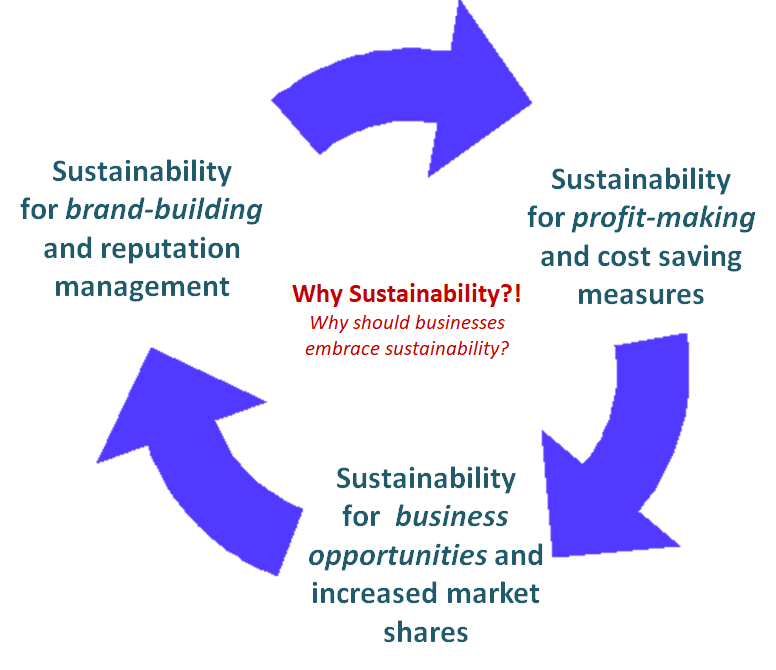
Figure 1: Why Sustainability?
As the model clearly depicts, sustainability drives impact across three primary areas, which continuously feed into and strengthen one another:
Pillar 1: REPUTATION |
Pillar 2: PROFIT |
Pillar 3: GROWTH |
Sustainability for Brand-Building and Reputation Management |
Sustainability for Profit-Making and Cost-Saving Measures |
Sustainability for Business Opportunities and Increased Market Shares |
| This crucial first pillar establishes the license to operate. A strong, authentic commitment to ethical sourcing, transparent operations, and community well-being builds trust with consumers, employees, and the public. This enhanced reputation acts as an insurance policy, mitigating risks and attracting top talent. | The second pillar focuses on the immediate and long-term financial benefits. Sustainability is fundamentally about efficiency. Measures like resource optimization, waste reduction, and energy conservation directly translate into lower operating costs. Furthermore, high ESG performance attracts capital, lowers the cost of borrowing, and preempts expensive regulatory non-compliance. | The final pillar shows how sustainability fuels future growth. By forcing businesses to rethink products and processes, sustainability becomes a powerful catalyst for innovation. This leads to the creation of new, high-value products and services, allowing the company to tap into rapidly expanding ethical markets and build resilient, future-proof supply chains. |
This cycle is virtuous: Gains in efficiency and profit fund new sustainable innovations, which in turn bolster reputation, ensuring continuous, resilient growth. The following sections will detail how your business can strategically leverage each of these three pillars to secure its competitive advantage.
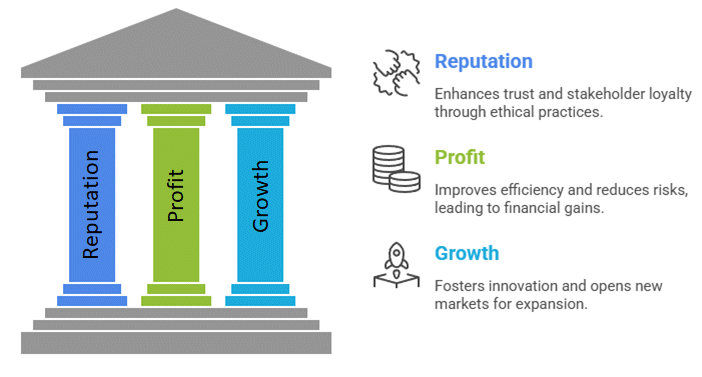
Figure 2: The Three Pillars of Business Sustainability
| Pillar 1 | REPUTAION |
| Sustainability for Brand-Building and Reputation Management | |
In the age of instant information and social media, a company's reputation is its most fragile and valuable asset. Consumers are more educated and ethically conscious than ever before, and they are willing to vote with their wallets. Embracing sustainability is no longer a "nice-to-have" corporate social responsibility (CSR) initiative; it's a prerequisite for trust and a powerful tool for building a resilient, respected brand.
The Trust Dividend
When a business commits to reducing its environmental impact, ensuring ethical labor practices, and contributing positively to its community, it earns what is being called a "trust dividend." This dividend translates directly into customer loyalty. Research consistently shows that consumers, particularly Millennials and Gen Z, prefer to purchase from brands that align with their personal values. They seek out products with certified sustainable sourcing, transparent supply chains, and minimal waste.This isn't just about avoiding bad press; it's about actively generating positive brand equity. Companies known for their genuine commitment to sustainability often become "purpose-driven brands," which resonate on an emotional level with consumers. This deeper connection makes them less vulnerable to competitors and allows them to weather economic downturns more effectively.
Mitigating Reputational Risk
On the flip side, a lack of commitment to sustainability is a massive liability. In an era of increasing transparency, poor environmental performance, or unethical supply chain practices (e.g., greenwashing, labor violations) can be exposed instantly, leading to swift and severe reputational damage. A single scandal can wipe out years of brand-building effort, leading to boycotts, public outrage, and a lasting stain on the corporate image.By proactively embedding sustainability, businesses are essentially future-proofing their reputation. They are establishing robust systems and verifiable metrics that demonstrate genuine care, turning potential risks into opportunities to showcase leadership. This authenticity is key, as consumers are quick to spot and reject superficial efforts.
Talent Attraction and Retention
Reputation extends beyond the consumer base. It also significantly impacts the labor market. Top talent, especially those entering the workforce today, prioritize working for companies whose values mirror their own. A strong sustainability profile makes a business an "employer of choice." It signals a progressive, ethical, and forward-thinking culture, which is crucial for attracting and retaining the best and brightest.Furthermore, employees working for a purpose-driven organization often report higher levels of engagement, morale, and productivity. They feel a greater sense of pride and connection to their work, which reduces turnover and lowers recruitment costs-a significant competitive advantage in a tight labor market.
| Pillar 2 | PROFIT |
| Sustainability for Profit-Making and Cost-Saving Measures | |
While the initial investment in sustainable practices might seem high, the long-term financial benefits are substantial and often immediate. Sustainability is not a cost center; it is a powerful driver of efficiency, innovation, and direct cost savings.
Operational Efficiency and Resource Management
The most direct financial benefit comes from improving operational efficiency. Sustainability initiatives are fundamentally about reducing waste and optimizing resource consumption. This includes:- Energy Efficiency: Investing in LED lighting, smart building management systems, and renewable energy sources dramatically lowers utility bills.
- Water Conservation: Implementing closed-loop water systems or drought-resistant landscaping reduces water usage and associated costs.
- Waste Reduction: Streamlining manufacturing processes to use less raw material and implementing comprehensive recycling/upcycling programs cuts down on disposal fees and raw material expenses.
Capital Access and Investor Confidence
The financial community is rapidly prioritizing environmental, social, and governance (ESG) factors. Investors are increasingly integrating ESG metrics into their decision-making process. They recognize that companies with strong sustainability profiles are better managed, less prone to regulatory risks, and more likely to achieve long-term financial stability.- Lower Cost of Capital: Companies with high ESG ratings often find it easier to secure loans and investment capital, sometimes at more favorable rates, as they are viewed as lower-risk entities.
- Attracting Institutional Investment: Major institutional investors, pension funds, and sovereign wealth funds are shifting trillions into sustainable or "impact" investments. Ignoring sustainability means actively excluding a company from this massive and growing pool of capital.
Regulatory Compliance and Risk Mitigation
Governments worldwide are implementing stricter environmental regulations, carbon taxes, and waste-management mandates. Businesses that adopt sustainable practices preemptively are ahead of the regulatory curve. This proactive stance minimizes the risk of costly fines, litigation, and mandatory, expensive retrofitting down the line. By viewing sustainability as a strategic tool rather than a compliance burden, businesses can turn mandatory changes into competitive advantages.
| Pillar 1 | GROWTH |
| Sustainability for Business Opportunities and Increased Market Shares | |
The pursuit of sustainability is a powerful engine for innovation and market expansion. It compels businesses to rethink their products, processes, and business models, often leading to the creation of entirely new, high-value opportunities.
Driving Innovation and New Product Development
Sustainability challenges often serve as innovation prompts. When a company commits to using less material, eliminating toxic chemicals, or creating a fully circular product, it forces engineers and designers to invent new solutions. This drive can lead to:- Patented Technologies: Developing proprietary sustainable materials or manufacturing processes that can be licensed or sold to others.
- Higher-Value Products: Creating premium-priced "eco-friendly" product lines that appeal to conscious consumers and justify a higher margin.
- New Revenue Streams: Establishing take-back programs, repair services, or product-as-a-service models that extend the product lifecycle and generate recurring revenue.
Accessing New and Emerging Markets
Sustainability is unlocking enormous market potential globally. Developing nations, facing immense environmental challenges, are leapfrogging older, polluting technologies and demanding clean, sustainable infrastructure and consumer goods. Companies that offer sustainable solutions, such as off-grid solar power, efficient public transit, or sustainable agriculture technology, are perfectly positioned to dominate these rapidly expanding sectors.In mature markets, businesses can capture "niche" markets that are becoming mainstream. The demand for plant-based foods, electric vehicles, ethical fashion, and zero-waste packaging is exploding. By aligning their offerings with these societal shifts, businesses can significantly increase their market share and diversify their revenue base, reducing dependence on older, potentially obsolescent product lines.
Building Supply Chain Resilience
A focus on sustainability requires a deep understanding of the entire supply chain, from the source of raw materials to the end-of-life disposal of the product. This scrutiny builds resilience. By diversifying sourcing, minimizing dependence on finite resources, and collaborating with ethical suppliers, businesses can mitigate risks associated with resource scarcity, climate disruption (like extreme weather events that halt production), and geopolitical instability. A resilient supply chain is a competitive advantage that ensures business continuity when competitors face disruption.The Interconnected Cycles of Success
The three pillars - Reputation, Profit, and Growth - are not isolated benefits; they form a virtuous, interconnected cycle.- Cost savings (Profit) free up capital to invest in innovative (Growth) sustainable products.
- These innovative products and ethical practices enhance Reputation and brand loyalty.
- A strong Reputation attracts top talent and secures favorable financing (Profit).
- Increased Market Share (Growth) provides the scale needed to drive further efficiency and cost reduction (Profit).
Major references:
CSR, ESG, environmental, sustainability and related reports collected and shared by the following services:- Corporate Register
- Report Alert
- Portal for Sustainability Reports
- Japan for Sustainability
- Australian Public Environmental Reports
|
on |

 |
Sustainable Business Programme Contact: |