Stakeholders and the Sustainability Imperative:
|
 |
Hari Srinivas |
| Policy Analysis Series E-238 |
|
Abstract: While sustainability is often framed as a voluntary commitment by businesses, the reality is that a complex ecosystem of external stakeholders exerts continuous influence on how corporate sustainability evolves. In Japan, this ecosystem is especially intricate, shaped by deep social norms, government policies, and an emphasis on harmony and trust. This paper systematically explores nine categories of external stakeholders - consumers, communities, media, finance, government, academia, industry associations, international actors, and the digital public - to identify what each group currently does and what more is needed to help advance business sustainability. Drawing on Japanese examples, the paper highlights how sustainability in Japan can be strengthened by transforming stakeholder pressure into partnership, aligning incentives, and creating systemic collaboration across sectors. |
|
Keywords: business sustainability, stakeholders, Japan, policy analysis, ESG, circular economy, SDGs, governance |
Japan's approach to sustainability is shaped by its unique blend of social consensus, regulatory coordination, and long-standing traditions of efficiency and respect for nature. Corporate sustainability in Japan has rarely emerged in isolation; rather, it reflects a dense web of expectations from society, government, and markets.
The evolution from corporate social responsibility (CSR) to environmental, social, and governance (ESG) practices has been guided as much by social pressure as by corporate conviction. Understanding these diverse external stakeholders, and how their interactions enable or constrain sustainability, is essential for advancing Japan's transition toward a resilient and inclusive green economy.
This document, part of the GDRC Policy Analysis Series explores a set of nine stakeholder groups that can form a constellation to support businesses on their path to sustainability.
It is based on information extracted and analyzed from environmental, sustainability CSR and ESG reports of Japanese companies available from their respective websites, as well as websites of other organizations and institutions mentioned in the case study snapshots.
The external stakeholder groups studied are illustrated in Figure 1. -
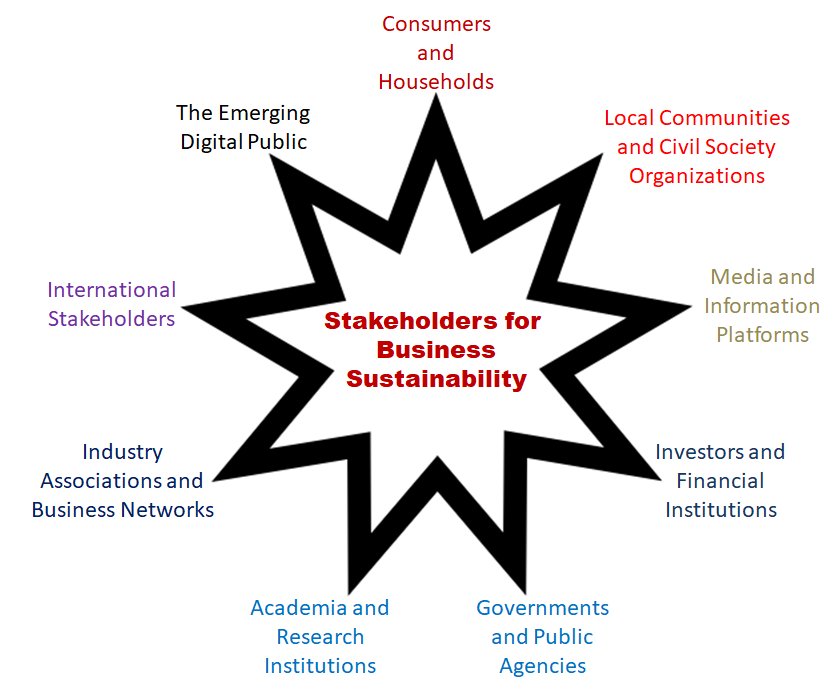
Figure 1: External Stakeholders for Business Sustainability
1. Consumers and Households
Japanese consumers are emerging as powerful sustainability actors, increasingly aware of product origins, carbon footprints, and ethical sourcing. However, while many consumers express concern about sustainability, purchase decisions often remain guided by convenience, price, and brand loyalty. The challenge is to shift from passive awareness to active engagement, demanding transparent information, supporting circular products, and rewarding sustainability through everyday consumption choices.To strengthen this, consumers need to cultivate what might be termed sustainability literacy: understanding how daily habits influence supply chains and environmental outcomes. Enhanced labeling, public education, and community-based consumption networks can reinforce sustainable purchasing behaviors.
Case Snapshots:
 Aeon's "Topvalu Green Eye" label promotes eco-friendly private-brand products, highlighting carbon reduction, ethical sourcing, and energy-efficient packaging, helping consumers make sustainable choices.
|
Muji's "Refill and Reuse" initiative encourages shoppers to refill detergents, oils, and cosmetics, normalizing reuse while reducing single-use plastics.
|
Seiyu's product traceability program allows customers to scan QR codes to see the origin and production process of food items, promoting transparency and informed purchasing.
|
2. Local Communities and Civil Society Organizations
Japan's communities and non-profit organizations (NPOs) play a bridging role between corporate initiatives and public expectations. Many local governments now view sustainability as a driver of regional revitalization, integrating businesses into local SDG platforms. NPOs such as Friends of the Earth (FoE) Japan and Kiko Network engage companies in dialogue, policy advocacy, and awareness programs.Yet, collaboration is still often project-based and short-term. Civil society must expand beyond campaigning to co-creating local sustainability frameworks - developing metrics that align community well-being with corporate performance. Municipalities can help institutionalize such partnerships through local procurement and community-based certification systems.
Case Snapshots:
|
Yokohama SDGs Design Center connects SMEs, local governments, and NPOs to co-develop regional sustainability initiatives, fostering collaboration and knowledge sharing.
|
Kitakyushu Eco-Town Program integrates companies into circular economy networks, linking recycling, local businesses, and community members to close resource loops.
|
Shonan SDGs Network organizes collaborative environmental campaigns such as beach cleanups and eco-education events, directly involving residents and businesses.
|
3. Media and Information Platforms
Japanese media has traditionally covered corporate sustainability through promotional reporting or CSR event announcements. However, the transition toward investigative, data-driven sustainability journalism is only beginning. Outlets such as Nikkei ESG and Japan for Sustainability are introducing greater depth and analytical rigor, though mainstream channels remain cautious.Media platforms must now act as amplifiers of accountability, focusing on transparency, sector comparisons, and innovative reporting formats. Highlighting small regional enterprises and grassroots sustainability practices can further democratize environmental discourse.
Case Snapshots:
|
Nikkei ESG Project publishes corporate ESG rankings and analytical reports, increasing transparency and enabling investors and consumers to compare companies.
|
Japan's national TV channel - NHK's "Zero Waste Japan" series showcases community-level sustainability practices, connecting grassroots innovations to broader national awareness.
|
Asahi Shimbun's Sustainable Japan portal aggregates case studies, policy updates, and green innovation news, making sustainability accessible to general audiences.
|
4. Investors and Financial Institutions
Japan's financial community is increasingly embedding sustainability within its investment criteria. The Government Pension Investment Fund (GPIF) has been a global trailblazer in ESG integration, influencing the behavior of private funds and asset managers. Major banks have adopted sustainability-linked financing instruments, and sustainability disclosure frameworks such as the Task Force on Climate-related Financial Disclosures. (TCFD) are gaining traction.However, the transition from ESG scoring to genuine impact measurement remains uneven, particularly for small and medium enterprises (SMEs). Financial institutions should support "transition finance" to help high-carbon sectors adapt rather than withdraw, and foster capacity-building for ESG reporting among smaller firms.
Case Snapshots:
|
GPIF's ESG Investment Strategy integrates environmental, social, and governance criteria across asset classes, influencing global investment behavior and corporate accountability.
|
MUFG's Green Loan Program finances renewable energy projects and decarbonization initiatives, offering incentives for corporate sustainability transitions.
|
SMBC's Sustainability-Linked Bonds provide lower interest rates to companies achieving specific environmental performance targets, encouraging measurable outcomes.
|
5. Governments and Public Agencies
The Japanese government plays a critical role in steering sustainability through regulations, incentives, and public procurement. National initiatives such as the GX (Green Transformation) strategy, Circular Economy Action Plan, and the SDGs Implementation Guiding Principles have created a strong framework. Ministries such as METI, MOEJ, and MLIT offer certifications and subsidies for green business models.Despite this, policy complexity and bureaucratic fragmentation often limit SME participation. Governments should focus on streamlining application processes, supporting cross-ministry integration, and linking national policies to measurable local outcomes. Rewarding innovation rather than compliance can catalyze stronger corporate engagement.
Case Snapshots:
|
METI's Eco-Action 21 certification provides SMEs with a structured framework for environmental management, enabling them to improve sustainability practices and reporting.
|
Tokyo Metropolitan Government's Carbon Reduction Reporting System mandates corporate disclosure, tracking emissions reductions and increasing accountability.
|
Fukuoka City's Green Startup Subsidy offers financial and technical support to innovative entrepreneurs addressing environmental challenges in local contexts.
|
6. Academia and Research Institutions
Universities and research centers in Japan are increasingly central to sustainability transitions. They provide both the technical expertise and the convening spaces for public-private partnerships. Collaborative research projects, sustainability design labs, and campus decarbonization programs are emerging as key vehicles for experimentation and knowledge transfer.Yet, academic contributions remain concentrated within environmental sciences and economics. Expanding interdisciplinary programs in sustainability management, behavioral economics, and design thinking will enable academia to serve as a stronger intermediary between business and society.
Case Snapshots:
|
Keio University's xSDG Laboratory facilitates collaboration among students, companies, and government bodies to co-create practical sustainability solutions.
|
University of Tokyo's Center for Global Commons partners with firms to develop strategies based on planetary boundaries, translating research into actionable business tools.
|
Ritsumeikan University's Industry-Academia Collaboration Program provides SMEs with training and guidance in environmental management and SDG implementation.
|
7. Industry Associations and Business Networks
Japan's corporate federations have incorporated sustainability into their charters, but more work is needed to translate these commitments into sector-wide action. Organizations such as Keidanren and Keizai Doyukai now emphasize carbon neutrality and circular economy targets, while sectoral groups develop voluntary guidelines.To strengthen this progress, industry bodies should move from voluntary declarations to performance benchmarking and supplier engagement. They can also facilitate pre-competitive collaborations where companies jointly tackle sustainability challenges that transcend market boundaries.
Case Snapshots:
|
Keidanren's "Society 5.0 for SDGs" initiative integrates digital innovation, corporate governance, and sustainability goals, promoting sector-wide alignment.
|
Japan Clean Ocean Material Alliance (CLOMA) brings together over 500 companies to reduce plastic waste through joint R&D and circular economy strategies.
|
Japan Construction Material Recycling Association develops standardized reuse practices, helping firms minimize waste in the construction sector.
|
8. International Stakeholders
Japan's corporations operate globally, meaning their sustainability performance is intertwined with international expectations. Global investors, trading partners, and multilateral institutions influence business practices through reporting requirements and sustainability standards. Aligning domestic initiatives with frameworks such as GRI, ISSB, and TNFD enhances Japan's global competitiveness.Japan must also ensure that its overseas corporate activities reflect the same sustainability standards practiced at home. Active participation in regional sustainability dialogues can project Japanese leadership in responsible production and supply-chain governance.
Case Snapshots:
|
UN Global Compact Network Japan supports over 400 member companies in aligning sustainability reporting with global standards and collaborative initiatives.
|
JETRO's Sustainable Trade Platform helps SMEs meet international ESG and green procurement criteria, expanding sustainable trade opportunities.
|
Toyota's Environmental Challenge 2050 applies sustainability commitments across its global operations and supply chain, setting measurable environmental targets.
|
9. The Emerging Digital Public
Japan's "digital public" - comprising social media users, online communities, and influencers - is a growing voice in shaping sustainability discourse. Although less confrontational than Western activism, online networks in Japan increasingly celebrate ethical consumption, low-waste living, and green entrepreneurship.Harnessing this digital engagement requires both companies and policymakers to treat online spaces as participatory governance tools. Businesses can engage digital communities through transparency dashboards, interactive sustainability campaigns, and open data on performance metrics.
Case Snapshots:
|
Fridays for Future Japan mobilizes youth through social media campaigns demanding corporate and governmental climate accountability, building a participatory culture.
|
Ethical Japan Platform connects sustainable brands with influencers to promote conscious consumption and eco-friendly lifestyles online.
|
Panasonic's "Sustainable Days" campaign uses digital storytelling and interactive media to engage young audiences in environmental awareness and sustainable product adoption.
|
Implications and Steps Forward
The analysis underscores that sustainability in Japan is not a altruistic, single-actor pursuit but a multi-stakeholder endeavor. The path forward lies in converting stakeholder pressure into partnerships, creating feedback loops where each actor's actions reinforce corporate responsibility and innovation.Key steps include:
- Institutionalizing Collaboration: Establish permanent multi-stakeholder councils at national and prefectural levels to align sustainability targets and monitoring systems.
- Deepening Transparency: Encourage public reporting and independent verification mechanisms that build trust among all parties.
- Supporting SMEs: Simplify tools, metrics, and financing mechanisms to enable small enterprises to meet sustainability goals.
- Empowering Local Action: Decentralize sustainability governance, giving communities and municipalities greater resources to coordinate local business ecosystems.
- Enhancing Public Literacy: Expand sustainability education and consumer engagement to create demand-driven change.
- Digital Integration: Use digital platforms to crowdsource ideas, track sustainability data, and strengthen citizen-business dialogue.
Ultimately, Japan's sustainability future depends not on corporate altruism but on the collective intelligence of its stakeholders - citizens, policymakers, financiers, and educators - working in concert to ensure that businesses thrive by being sustainable.
References
The above analysis is based on the websites and ESG/CSR/Sustainability/environmental reports of the companies and organizations/agencies listed in the "Case Snapshots" of each of the nine stakeholder categories.|
on |

 |
Sustainable Business Programme Contact: |