
Urban Rewilding
Vegetated Swales (Bioswales) in Urban Rewilding
Hari Srinivas One-Pager Series E-248
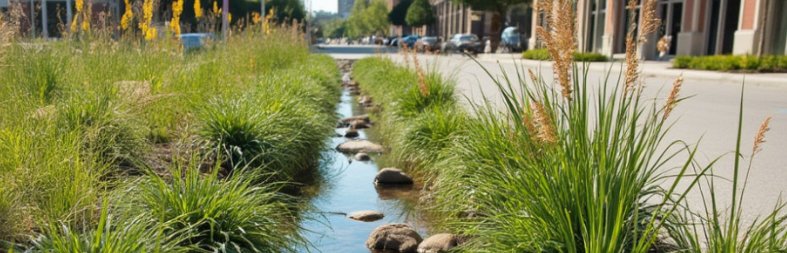
Bioswales are shallow, vegetated channels designed to manage stormwater while restoring ecological functions in urban areas. By slowing, filtering, and absorbing rainwater runoff, bioswales reduce flooding and pollution while reintroducing soil, plants, and micro habitats into highly built environments. As part of urban rewilding, bioswales transform conventional drainage infrastructure into living systems that support biodiversity, improve water quality, moderate urban heat, and reconnect cities with natural water cycles.
When integrated along streets, public spaces, and building sites, bioswales demonstrate how small scale green interventions can deliver both ecological and urban resilience benefits.
Bioswales are also known as vegetated swales, grassed swales, infiltration swales, biofiltration swales, filter swales, and vegetated drainage channels.Bioswales are vegetated, shallow landscape channels designed to manage stormwater in ways that mimic natural hydrological processes. Unlike conventional concrete drains that rapidly convey rainwater away from urban areas, bioswales slow down runoff, allow water to infiltrate into the soil, and filter pollutants through vegetation and engineered soil layers. In the context of urban rewilding, bioswales represent a practical shift from grey infrastructure toward living systems that restore ecological functions within cities.In different countries they may also be referred to as Sustainable Drainage System (SuDS) swales, Low Impact Development (LID) swales, or Water Sensitive Urban Design (WSUD) swales, reflecting local planning and stormwater management approaches.
Rapid urbanisation has replaced natural surfaces with roads, roofs, and pavements, disrupting water cycles and increasing flood risks, heat stress, and water pollution. Bioswales help reverse these trends by reintroducing soil, plants, and micro ecosystems into the urban fabric. Rainwater from surrounding streets, parking areas, and buildings is directed into bioswales, where vegetation reduces flow velocity, sediments settle, and contaminants such as oils and heavy metals are absorbed or broken down by plant roots and soil microorganisms. Water is then gradually absorbed into the ground or released slowly into drainage systems, reducing peak runoff during heavy rainfall.
From an urban rewilding perspective, bioswales offer multiple co benefits beyond water management. They create linear green habitats that support insects, birds, and urban flora, contributing to biodiversity even in dense city centres. The presence of vegetation improves microclimates by cooling surrounding areas and increasing humidity, helping to mitigate urban heat island effects. Bioswales also enhance the visual and experiential quality of streets and public spaces, replacing sterile drainage features with green, seasonal landscapes that reconnect residents with natural processes.
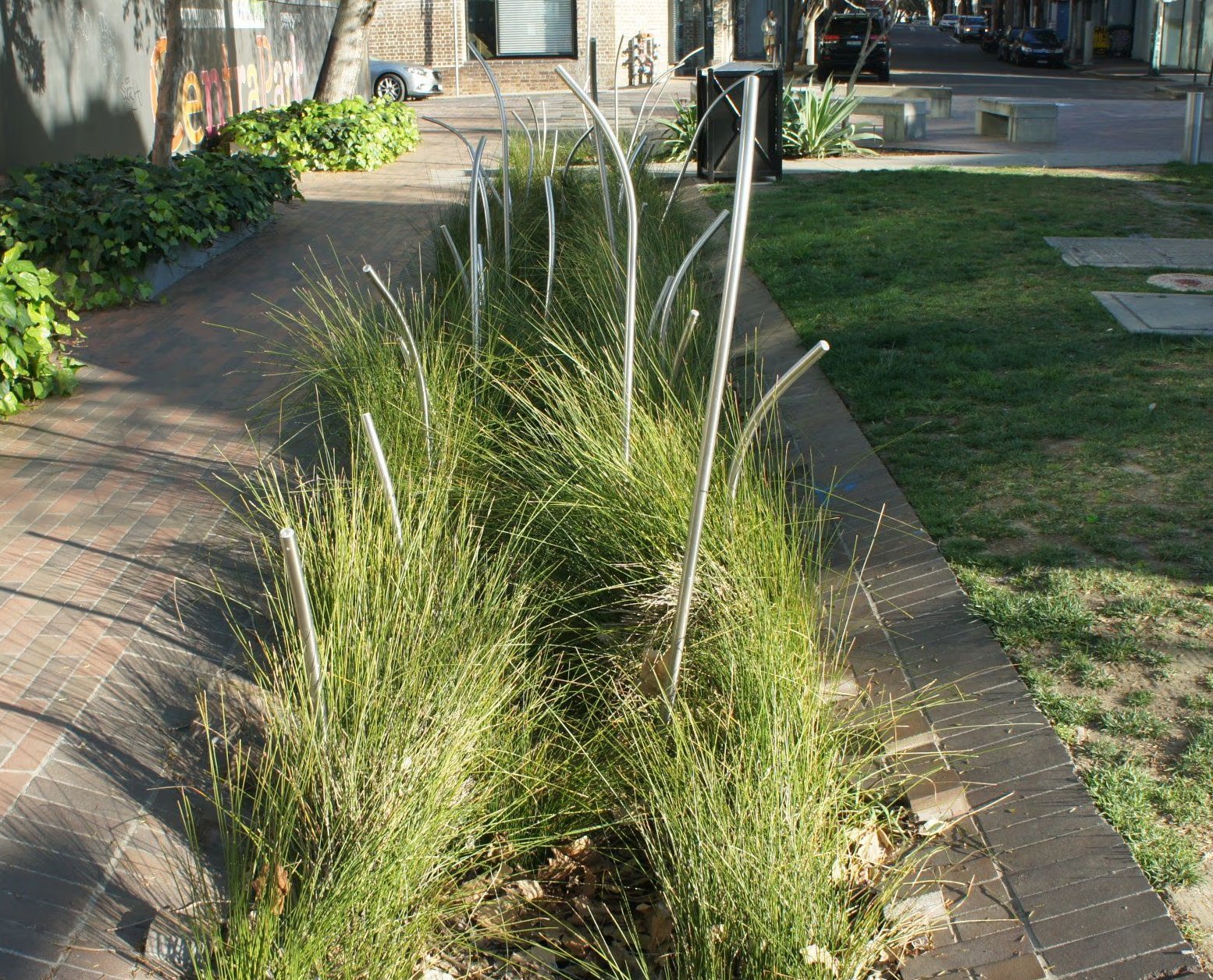
Key characteristics
- Shallow, gently sloped channels
- Planted with grasses, shrubs, or small trees that tolerate wet and dry conditions
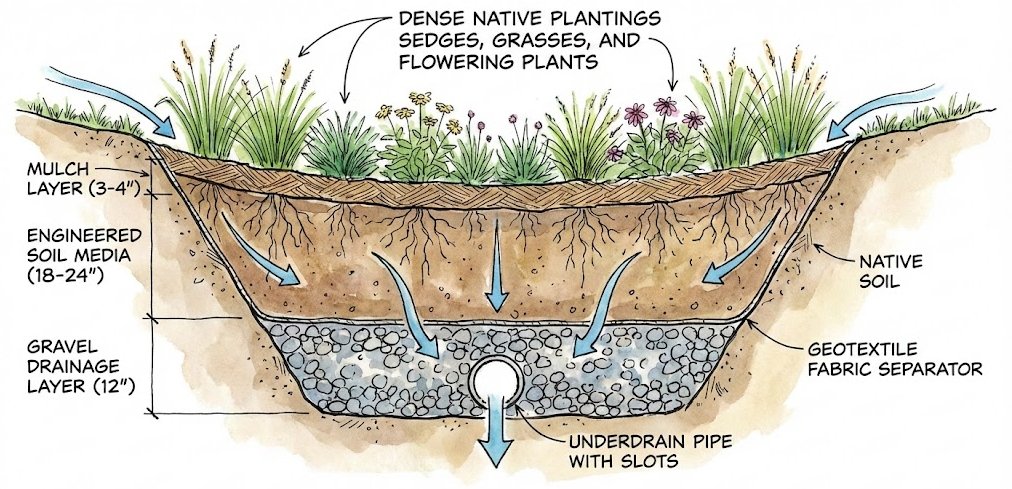
- Often lined with engineered soil, sand, and gravel layers
- Designed to temporarily hold water after rain, then drain within a short time
Bioswales are highly adaptable and can be integrated at different scales. At the street level, they can be installed along sidewalks and medians. At the site level, they can be incorporated into campuses, housing developments, and commercial areas. At the district level, networks of bioswales can form green corridors that connect parks, waterways, and other rewilded spaces. Their modular nature makes them suitable for retrofitting existing urban areas as well as for inclusion in new developments.
Figure 1: Cross-section of a typical bio-swaleHow bioswales work
- Rainwater flows into the bioswale from nearby paved surfaces
- Vegetation slows the water, reducing erosion and flood risk
- Soil and plant roots filter pollutants such as oil, heavy metals, and sediments
- Cleaned water infiltrates into the ground or is slowly released to drains
What are bio-swales' main benefits?
- Reduces urban flooding and peak runoff
- Improves water quality
- Recharges groundwater
- Cools urban areas and adds greenery
- Supports urban biodiversity
Where are bio-swales set up?
- Along streets and sidewalks
- In parking lots and campuses
- Around public buildings and housing complexes
- As part of sponge city or low impact development designs
In policy and planning terms, bioswales align closely with nature-based solutions, low impact development, and sponge city approaches. They offer a cost effective complement to conventional drainage infrastructure, particularly in the face of climate change induced increases in extreme rainfall. Successful implementation requires coordination across urban planning, landscape design, and maintenance systems, as well as community awareness to ensure long term performance.
As part of urban rewilding strategies, bioswales demonstrate how functional infrastructure can be redesigned to work with nature rather than against it. By restoring elements of natural water cycles, supporting biodiversity, and improving urban livability, bioswales serve as a tangible example of how cities can move toward more resilient, regenerative, and ecologically grounded futures.

|
CITATION TEXT:
|

 |
Return to Urban Rewilding Contact: |