
Wilderness and the Urban Fabric:
Ecosystem Restoration and Urban Rewilding
Hari Srinivas Concept Note Series C-102
Abstract:
This concept note examines the interconnected roles of ecosystem restoration, ecosystem services, and urban rewilding in addressing the accelerating ecological crises of the 21st century. While restoration has traditionally focused on rural or wilderness areas, cities have emerged as critical frontiers for ecological recovery. The paper highlights how restoring degraded ecosystems builds resilience, reinstates vital ecological functions, and secures the natural capital needed to sustain essential ecosystem services.It further argues that urban rewilding provides a strategic and innovative pathway for embedding these benefits directly into urban environments. By restoring natural processes, enhancing connectivity, creating self-sustaining habitats, and embracing novel ecosystems, urban rewilding strengthens climate regulation, biodiversity, public well-being, and ecological infrastructure. Together, these approaches offer a forward-looking framework for transforming cities into resilient, livable, and ecologically productive spaces in an urbanizing world.
Keywords:
ecosystem restoration, ecosystem services, urban rewilding, biodiversity, climate resilience, nature based solutions, ecological connectivity, sustainable cities
■ The Imperative for Ecological Recovery in an Urban Age
The 21st century is defined by two interlocking global crises: biodiversity loss and climate change. These challenges are inextricably linked to the widespread degradation of natural ecosystems. In response, the global community has prioritized large-scale initiatives such as the UN Decade on Ecosystem Restoration (2021-2030), emphasizing the urgent need to halt and reverse environmental damage. This restoration is not merely an ecological goal; it is a critical strategy for securing the fundamental ecosystem services that underpin human well-being, climate stability, and economic prosperity.While traditional ecological restoration often focuses on remote or rural landscapes, a crucial and rapidly emerging front for this work is the urban environment. Cities, which house over half the world's population, are ecological sinks and major drivers of degradation. Yet, they also hold immense potential for recovery. The concept of urban rewilding offers a progressive, nature-based solution, serving as the strategic bridge between the broad mandate of ecosystem restoration and the practical, tangible benefits provided by enhanced ecosystem services within the dense, human-dominated urban fabric. This concept note explores the synergistic relationship between these three concepts, positioning urban rewilding as an essential and innovative paradigm for creating resilient, livable, and truly sustainable cities.
■ Ecosystem Restoration: The Foundation for Recovery
Ecosystem restoration is fundamentally defined as the process of assisting the recovery of an ecosystem that has been degraded, damaged, or destroyed. The objective is to reinstate the ecological processes and functions that make an ecosystem resilient and adaptable. Unlike simple conservation, which protects existing healthy ecosystems, restoration actively repairs compromised ecological systems.The Scope and Scale of Restoration
Restoration is a highly diverse discipline, ranging from actively planting native flora in a deforested area to passively removing human pressures so that nature can self-repair. The goals of restoration are multi-faceted:For restoration to be successful, it must move beyond isolated patches and operate at a landscape scale, reconnecting fragmented habitats and recognizing that even human-dominated landscapes, such as cities, are part of a larger ecological mosaic. It is within this context of functional repair and resilience-building that the concept of ecosystem services gains its vital relevance.
- Biodiversity Enhancement: Increasing the variety of life at the genetic, species, and ecosystem levels.
- Functional Repair: Reinstating critical processes such as water filtration, nutrient cycling, and soil formation.
- Resilience Building: Ensuring ecosystems can withstand and recover from disturbances such as extreme weather events and climate change impacts.
■ Ecosystem Services: Valuing Nature's Utility
Ecosystem services are the countless benefits that humans derive from nature. The concept provides a powerful framework for quantifying the value of natural processes, moving them from intangible environmental concerns to recognized economic and societal assets. These services are typically categorized into four types:
- Provisioning Services: Products obtained from ecosystems, such as food, fresh water, timber, and genetic resources.
- Regulating Services: Benefits obtained from the regulation of ecosystem processes, such as climate regulation, flood control, disease regulation, and water purification.
- Cultural Services: Non-material benefits people obtain from ecosystems, including spiritual enrichment, recreation, aesthetic value, and opportunities for education and reflection.
- Supporting Services: Services necessary for the production of all other ecosystem services, such as soil formation, photosynthesis, and nutrient cycling.
The Link to Restoration
Ecosystem degradation, driven by human activities such as pollution and habitat loss, directly compromises the delivery of these services. For example, the loss of urban wetlands reduces natural regulating services such as stormwater retention, leading to increased flood risk.Therefore, ecosystem restoration becomes the indispensable tool for restoring the underlying natural capital-the healthy, functioning ecosystems-necessary to sustain the flow of these critical ecosystem services. By making this value tangible (e.g., calculating the cost savings from natural flood protection), the ecosystem services concept provides a strong economic and social justification for investing in large-scale ecological repair.
■ Urban Rewilding: Restoration in the City
Urban rewilding represents a specific, highly relevant application of ecosystem restoration principles tailored to the unique spatial, social, and political contexts of cities. While classic rewilding aims to restore large-scale wilderness and natural processes with minimal human intervention, urban rewilding is a pragmatic adaptation. It focuses on integrating nature back into the built environment to create self-sustaining and resilient urban ecosystems that require less intensive human management over time.Core Principles of Urban Rewilding
Urban rewilding is not merely "greening" a city with manicured parks; it embraces a higher level of ecological complexity and autonomy:
- Restoring Natural Processes: Rather than focusing solely on species counts, the priority is on restoring fundamental processes such as natural water flow (e.g., daylighting buried streams), natural succession, and dynamic disturbance regimes.
- Increased Connectivity: Creating green and blue corridors-such as contiguous habitat patches, green roofs, and pollinator pathways-to link fragmented green spaces, allowing wildlife to move and ecosystems to function across the urban matrix.
- Minimal Intervention: After initial setup, the goal is to reduce human management (e.g., less mowing of lawns, reduced use of pesticides), allowing natural selection and self-organization to shape the environment.
- Novel Ecosystems: Recognizing that a complete return to a historical ecological baseline is often impossible in a city, urban rewilding often works toward creating new, functional, and biodiverse ecosystems (e.g., a rewilded brownfieldA brownfield is land that was previously used for industrial or commercial purposes and is now abandoned, idle, or underused, and where pollution or contamination may complicate redevelopment. site) that provide maximum ecological utility.
The Symbiotic Link: Rewilding as a Service Provider
Urban rewilding acts as the strategic implementation arm of ecosystem restoration within the urban sphere, with the express purpose of enhancing the provision of ecosystem services to the city's inhabitants. This link is the central argument for the paradigm shift from traditional urban greening to rewilding.■ Enhancing Urban Ecosystems through Rewilding
The rewilding approach exponentially increases the delivery of ecosystem services compared to conventional, high-maintenance urban landscaping:
- Regulating Services (Climate and Water):
- Urban Heat Island Mitigation: The establishment of native tree canopies and complex vegetation, promoted by rewilding, significantly increases evapotranspiration and shade, leading to cooler city temperatures.
- Flood Control: Restoring wetlands, naturalizing riverbanks, and encouraging diverse, permeable soil structures dramatically improves the capacity for stormwater retention and infiltration, reducing the risk and cost of urban flooding.
- Air and Water Purification: Diverse plant communities absorb pollutants and sequester atmospheric carbon dioxide (a key regulating service for climate change mitigation).
- Cultural and Social Services (Well-being):
- Health and Well-being: Access to wild, unmanicured, and biodiverse nature-a core output of rewilding-has proven mental health benefits, reducing stress and increasing overall quality of life.
- Nature Connection: Urban rewilding creates opportunities for city dwellers to reconnect with "wildness" and fosters a sense of stewardship, addressing the critical psychological and social need for human-nature interaction.
- Supporting Services (Biodiversity):
- By focusing on ecological processes and native species, rewilding actively builds natural capital. This results in an increase in urban biodiversity-pollinators, birds, and insects-which in turn supports the provisioning services of food security and the regulating service of local ecological health.
■ Rewilding the Future City: Policy Implications
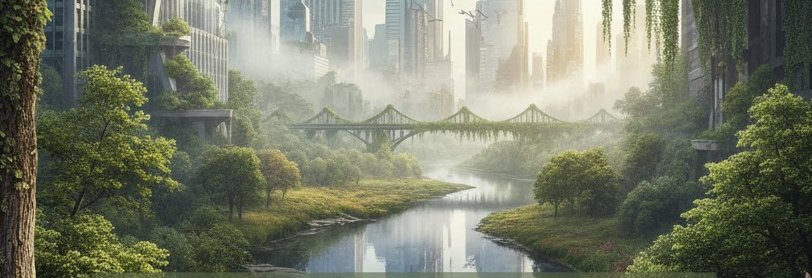
The convergence of ecosystem restoration, ecosystem services, and urban rewilding provides a powerful, actionable blueprint for 21st-century urban development. Ecosystem restoration sets the high-level goal of ecological repair; ecosystem services provides the compelling framework for valuing the benefits of that repair; and urban rewilding is the specific, localized strategy for achieving it in the most human-dense environment on Earth.Urban planning practices must shift from viewing nature as an amenity to treating it as essential infrastructure. By embracing the practice of urban rewilding, that is, allowing nature to lead, increasing ecological connectivity, and restoring dynamic processes, cities can transition from being ecological liabilities to being hubs of biodiversity and providers of essential services. This approach is not a retreat from modernity but an evolution, where wilderness and buildings coexist.
■ Urban Rewilding: Case Study Snapshots
Cheonggyecheon Stream Restoration, Seoul, South Korea
Category Rewilding Action Ecosystem Services Provided Project Type Daylighting a stream and demolishing a 5.8 km elevated highway. Urban heat mitigation, flood control, and biodiversity gains. Concept Link Large-scale restoration enhancing hydrology for climate resilience. Social Value Green corridor creation, cleaner air, and economic revitalization.
The High Line, New York City, USA
Category Rewilding Action Ecosystem Services Provided Project Type Adaptive reuse of an elevated rail line into a linear park. Stormwater retention and increased urban biodiversity. Concept Link A novel ecosystem offering habitat and water retention benefits. Social Value A cultural and recreational space attracting millions of visitors.
Bishan-Ang Mo Kio Park, Singapore
Category Rewilding Action Ecosystem Services Provided Project Type Converting a concrete channel into a meandering river with wetlands. Water purification and enhanced flood protection. Concept Link Restored hydrology boosting regulating services via nature-based solutions. Social Value Improved recreation and educational engagement with nature.
Miyawaki Forests (Pocket Forests), Global and Europe
Category Rewilding Action Ecosystem Services Provided Project Type Dense native mini forests planted in small urban spaces. Rapid habitat creation, carbon sequestration, and air purification. Concept Link Small-scale rewilding accelerating ecological succession. Social Value Community involvement and nature education.
This work by GDRC is licensed under a Creative Commons Attribution-ShareAlike 4.0 International License. You are free to share and adapt this piece of work for your own purposes, as long as it is appropriately citied. . More info: http://creativecommons.org/licenses/by-sa/4.0/
on


 |
Return to Urban Rewilding Contact: |