The Path to Business Sustainability:
|
 |
Hari Srinivas |
| Policy Analysis Series E-237. |

|
Abstract: This Policy Analysis paper explores twelve emerging themes that define the evolving landscape of sustainable business in the Asia-Pacific region, structured around a four-pillar framework: Redesigning Systems, Rethinking Value, Rebuilding Trust, and Reframing Behaviour. These pillars capture the systemic, value-based, governance, and behavioural dimensions of sustainability transitions within business ecosystems. Each theme is illustrated through three concise case studies drawn from both developed and developing economies, highlighting how enterprises are integrating circular production, climate-positive strategies, digital transparency, and ethical innovation into their operations. Together, these cases provide an evidence base for understanding where businesses stand on their path toward sustainability, and how policy, finance, and societal change can accelerate this transition. |
|
Keywords:
sustainable business, Asia-Pacific, circular economy, regenerative models, green finance, ESG, digital transparency, inclusive growth |
Introduction
The transition toward sustainable business practices is evolving from incremental improvements to systemic transformation. The GDRC Sustainable Business Programme views this shift not merely as environmental management but as the redesign of how economies create, distribute, and sustain value. Businesses today are expected to operate within planetary boundaries while contributing positively to social and economic resilience. Across the Asia-Pacific region, innovative enterprises are demonstrating that sustainability can be a driver of competitiveness, innovation, and long-term stability.The themes/issues and analysis presented in this document is based on research extracted from environmental and sustainability reports of the Asia-Pacific companies listed under each theme below, including ESG and other information available from their websites.
The patterns that emerge from the research point towards a "Four Pillar" model. This four-pillar model situates business sustainability as a systemic transition and not a single-domain shift.
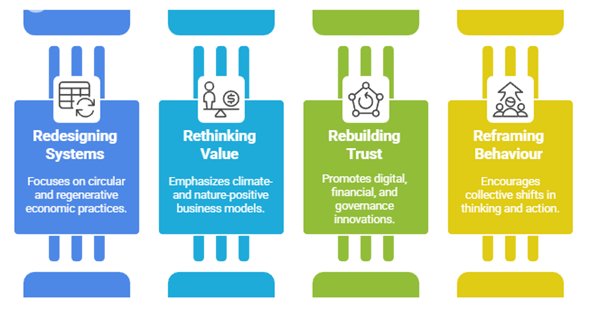
Figure 1: The Four-Pillar Framework of Business Sustainability
- PILLAR I: Redesigning Systems
transforms how we produce and consume - covering issues related to Circular and Regenerative Economies - PILLAR II: Rethinking Value
transforms what we measure and reward - covering issues related to Climate- and Nature-Positive Enterprises - PILLAR III: Rebuilding Trust
transforms how we govern and finance - covering issues related to Digital, Financial and Governance Innovations - PILLAR IV: Reframing Behaviour
transforms how we think, learn, and act collectively - covering issues related to Social and Behavioural Transitions
| Together, these four lenses provide a coherent way to analyze and communicate sustainable business evolution in the Asia-Pacific region - while keeping analytical focus on linkages across environmental, social, and economic systems. |
Each pillar represents a dimension of transition: how we produce and consume, what we value, how we govern and finance, and how we think and act collectively. Within these pillars, twelve cutting-edge themes are illustrated through case studies drawn from both developed and developing economies.
Together, they highlight the diversity of pathways through which businesses are advancing sustainability - from circular production models and climate-positive strategies to digital transparency and ethical innovation. The four-pillar framework provides a coherent structure for future research, capacity-building, and policy engagement in business sustainability.
Pillar I |
Redesigning Systems |
Circular and Regenerative Economies
Focus: Transforming production and consumption systems to eliminate waste and regenerate natural and social capital.
Themes:
- 1.1 Regenerative Business Models
- 1.2 Product-as-a-Service and Dematerialization
- 1.3 Waste-to-Wealth and Urban Mining
- 1.2 Product-as-a-Service and Dematerialization
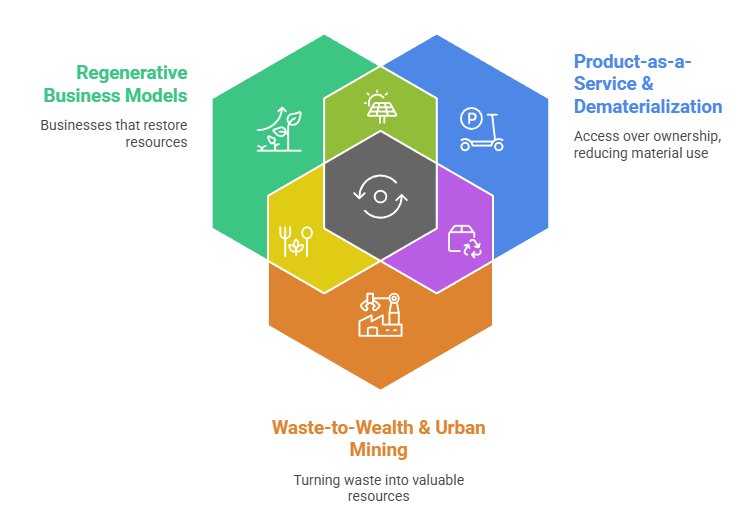
Figure 2: Pillar I - Redesigning Systems
1.1 Regenerative Business Models
| Moving beyond circularity to businesses that restore ecological and social capital - including regenerative agriculture, forest-positive sourcing, and biodiversity credits. |
By linking production and consumption cycles to the renewal of natural capital, regenerative approaches redefine how enterprises interact with their environments. They embody a shift from efficiency-driven sustainability to value creation through ecosystem restoration, empowering companies to become catalysts for thriving local and planetary systems.
 Japan - Maruyama Coffee (Nagano):
Through direct partnerships with farmers in East Timor and Ethiopia, Maruyama Coffee applies regenerative agriculture principles by investing in soil health, shade trees, and biodiversity. The company integrates these practices into its brand identity and customer education initiatives. |
 Philippines - Hineleban Foundation:
This social enterprise restores mountain forests in Bukidnon through agroforestry coffee cultivation with indigenous communities, combining livelihood generation with watershed regeneration. |
 Australia - Yalumba Wine Company:
Yalumba uses regenerative viticulture techniques-cover crops, organic mulching, and minimal tillage-to restore soil carbon and improve ecosystem resilience across its vineyards. |
1.2. Product-as-a-Service and Dematerialization
| Exploring subscription, sharing, and leasing models that reduce material int"ensity - especially in sectors like electronics, apparel, and construction. |
Dematerialization extends this approach through digital services and platform-based delivery, minimizing physical throughput. Together, they offer pathways toward decoupling growth from resource depletion. GDRC explores how these models can scale in emerging markets, integrating policy incentives, consumer awareness, and lifecycle management systems.
|
Japan - Ricoh GreenLine Program: Ricoh's product-as-a-service model remanufactures and leases office equipment, retaining ownership of materials and ensuring closed-loop recycling at end-of-life. |
 Singapore - SP Mobility:
The company offers electric vehicle charging and mobility-as-a-service solutions that replace private car ownership with shared, digital alternatives. |
 India - Rentomojo:
Rentomojo's furniture and appliance rental platform promotes dematerialization by reducing the need for product ownership, extending lifespans, and encouraging reuse. |
1.3. Waste-to-Wealth and Urban Mining
| Innovations in reclaiming critical minerals, secondary raw materials, and industrial by-products, linking directly to GDRC's MEWW framework. |
It supports industrial symbiosis, where one firm's by-product becomes another's input, reducing extraction pressure and landfill dependency. GDRC's focus is on policy and institutional mechanisms that promote resource recovery ecosystems, integrating the Material-Energy-Water-Waste (MEWW) framework to close material loops and create local green employment.
|
Japan - DOWA Holdings: Through its Kosaka Smelter, DOWA extracts rare metals such as gold and indium from e-waste, demonstrating large-scale urban mining in a resource-scarce country. |
India - Attero Recycling: Attero specializes in e-waste recycling and metal recovery using proprietary clean technologies, creating circular economy opportunities from discarded electronics. |
 Thailand - Wongpanit Recycling:
Wongpanit's network of community-based recycling franchises transforms waste into tradable assets, promoting local entrepreneurship and circular value creation. |
Pillar II |
Rethinking Value |
Climate- and Nature-Positive Enterprises
Focus: Embedding climate action and biodiversity enhancement into the core of business value creation.
Themes:
- 2.1 Net-Positive Carbon Strategies
- 2.2 Nature-Based Business Solutions
- 2.3 Climate Resilience in Supply Chains
- 2.2 Nature-Based Business Solutions
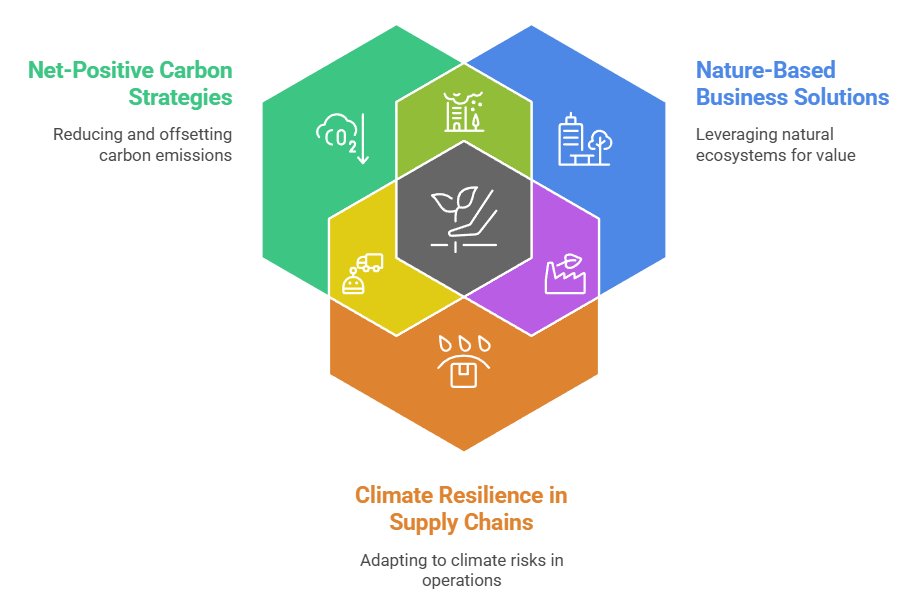
Figure 3: Pillar II - Rethinking Value
2.1 Net-Positive Carbon Strategies
| Going beyond "net zero" to measure absolute positive impact through insetting, carbon farming, and deep decarbonization partnerships. |
This new paradigm recognizes businesses as climate actors capable of reversing damage through science-based targets and verifiable outcomes. GDRC highlights frameworks and tools that guide enterprises toward climate positivity, ensuring alignment with both local action and global commitments.
 New Zealand - Air New Zealand:
The airline invests in carbon insetting through native forest regeneration and sustainable aviation fuel trials, aiming for a net-positive carbon impact by 2050. |
India - ITC Limited: ITC has been carbon-positive for over 15 years through afforestation, renewable energy, and watershed management initiatives that offset its emissions internally. |
Philippines - Energy Development Corporation (EDC): EDC integrates geothermal energy generation with reforestation programs, achieving carbon positivity while protecting biodiversity in its project areas. |
2.2 Nature-Based Business Solutions
| Integrating ecosystem services valuation, rewilding initiatives, and green infrastructure into business operations and supply chains. |
Nature-positive strategies not only reduce ecological footprints but enhance long-term resilience and brand value. GDRC's focus lies in linking these approaches with sustainability reporting, enabling enterprises to account for their dependence on and contribution to natural systems.
|
Singapore - City Developments Limited (CDL): CDL's developments incorporate green roofs, vertical gardens, and natural ventilation, aligning urban development with ecosystem services and biodiversity conservation. |
Japan - Suntory Group: Suntory's "Natural Water Sanctuaries" project restores forest ecosystems in catchment areas that supply its beverage factories, ensuring water security and biodiversity. |
 Vietnam - An Phat Holdings:
An Phat develops biodegradable bioplastics derived from corn starch, reducing pollution and integrating renewable agricultural feedstocks. |
2.3 Climate Resilience in Supply Chains
| Focusing on adaptation and risk management, especially for small suppliers in developing economies vulnerable to climate shocks. |
Through shared data, scenario planning, and early-warning systems, companies can safeguard productivity and livelihoods. GDRC explores governance frameworks and partnerships that build adaptive capacity across supply networks, turning climate resilience into a core element of corporate competitiveness.
 Bangladesh - DBL Group:
A textile exporter integrating climate risk assessment, rainwater harvesting, and renewable energy in production to safeguard operations from flooding. |
Japan - Aeon Co. Ltd.: Aeon collaborates with local farmers to diversify sourcing and introduce resilient crop varieties, strengthening supply chains against climate variability. |
 Indonesia - Unilever Indonesia:
Unilever works with smallholder farmers to develop drought-tolerant crops and climate-resilient agricultural practices, enhancing long-term supplier sustainability. |
Pillar III |
Rebuilding Trust |
Digital, Financial and Governance Innovations
Focus: Reinforcing corporate accountability and transparency through data, finance, and governance systems.
Themes:
- 3.1 ESG 2.0 and Impact Measurement
- 3.2 Green and Blue Finance
- 3.3 Data-Driven Transparency and Traceability
- 3.2 Green and Blue Finance
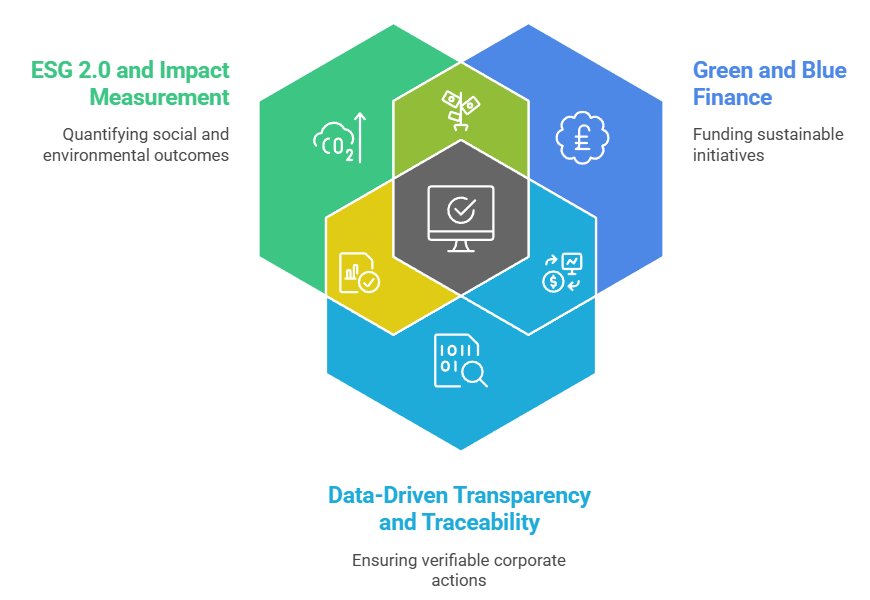
Figure 4: Rebuilding Trust
3.1 ESG 2.0 and Impact Measurement
| Evolving ESG from reporting to transformation - using double materiality, science-based targets, and real-time sustainability data analytics. |
Impact measurement now extends beyond shareholder returns to societal and ecological outcomes. GDRC examines innovations in sustainability accounting, data integration, and transparency that make ESG frameworks more accountable, comparable, and actionable across sectors and geographies.
 Hong Kong - Swire Pacific:
Swire employs science-based targets and detailed ESG reporting using integrated data platforms that measure climate and biodiversity impacts. |
 Malaysia - Sime Darby Plantation:
Sime Darby uses advanced traceability and grievance mechanisms to monitor sustainability across its palm oil supply chain, enhancing transparency. |
Australia - BHP Group: BHP integrates ESG analytics and real-time sustainability dashboards into corporate strategy, linking executive performance to social and environmental outcomes. |
3.2 Green and Blue Finance
| Exploring financial instruments such as sustainability-linked bonds, blended finance, and "blue economy" investments for oceans and freshwater ecosystems. |
By pricing risk and reward through ecological performance, finance becomes a driver of systemic change. GDRC highlights the growing convergence of environmental finance and corporate sustainability, emphasizing the role of regulatory frameworks and investor stewardship.
|
Japan - MUFG Bank: MUFG issues sustainability-linked loans and green bonds supporting renewable energy and sustainable housing, aligning finance with SDG goals. |
 Fiji - Government of Fiji:
The world's first sovereign blue bond financed ocean conservation and sustainable fisheries, setting a precedent for small island economies. |
Indonesia - Bank Negara Indonesia (BNI): BNI's green financing portfolio supports solar energy, energy efficiency, and sustainable transport, using environmental performance criteria for lending. |
3.3 Data-Driven Transparency and Traceability
| Using blockchain and digital product passports to track sustainability performance across global supply networks. |
Data-driven systems also allow for credible certification and reporting, reducing greenwashing. GDRC's research focuses on the governance, interoperability, and privacy dimensions of such technologies, ensuring that digital transparency strengthens-not replaces-ethical and sustainable business practices.
|
Thailand - SCG Chemicals: SCG applies blockchain-based traceability to monitor recycled plastic feedstock and ensure authenticity of circular materials. |
Japan - Toyota Motor Corporation: Toyota's digital product passports document carbon emissions and material flows for vehicle components, enhancing supply chain accountability. |
Vietnam - Dragon Capital: The investment firm uses ESG data analytics and satellite monitoring to track deforestation and water management among portfolio companies. |
Pillar IV |
Reframing Behaviour |
Social and Behavioural Transitions
Focus: Aligning human behaviour, ethics, and collective action with sustainability goals through participation and inclusion.
Themes:
- 4.1 The Just Transition and Inclusive Green Jobs
- 4.2 Consumer Co-creation and Behavioural Change
- 4.3 Corporate Purpose and Ethics in the Age of AI
- 4.2 Consumer Co-creation and Behavioural Change
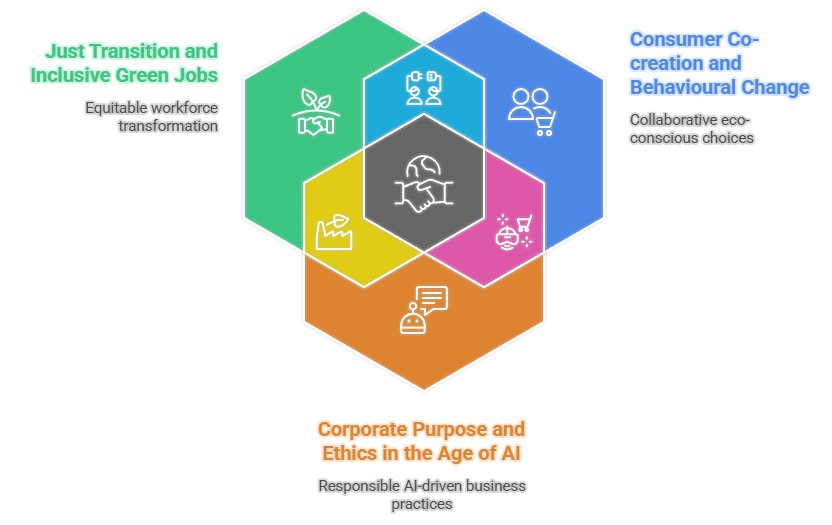
Figure 5: Reframing Behaviour<
4.1 The Just Transition and Inclusive Green Jobs
| Ensuring that decarbonization and sustainability transitions are equitable, inclusive, and locally beneficial. |
Businesses play a critical role in enabling fair transitions across their value chains. GDRC emphasizes policies and partnerships that balance environmental goals with social equity, embedding inclusion at the heart of sustainable business transformation.
|
India - SELCO Foundation: SELCO provides solar-powered livelihood solutions for low-income workers, linking renewable energy access to inclusive employment generation. |
Australia - Hunter Region Transition Authority: Facilitates retraining and economic diversification for coal workers in New South Wales, ensuring a just transition to a clean energy economy. |
Indonesia - Waste4Change: Creates dignified jobs for informal waste workers through structured recycling systems and digital payment mechanisms. |
4.2 Consumer Co-creation and Behavioural Change
| Designing interventions that nudge sustainable consumption through digital platforms, gamification, and cultural framing. |
Businesses that engage consumers as partners in sustainability build stronger trust and loyalty. GDRC explores how social innovation and behavioural science can shape markets for sustainability, linking individual action with systemic change.
|
Japan - Muji: Muji's minimal design philosophy and refill initiatives encourage consumers to adopt simpler, low-impact lifestyles through design-led engagement. |
 South Korea - Re:Harvest:
Re:Harvest upcycles spent grain into health foods, engaging consumers directly through digital storytelling on food waste and nutrition. |
Thailand - Refill Station Bangkok: Community refill stores empower consumers to reduce packaging waste by bringing their own containers for everyday products. |
4.3 Corporate Purpose and Ethics in the Age of AI
| Exploring how artificial intelligence, automation, and predictive analytics influence sustainability ethics, decision-making, and stakeholder trust. |
AI can also be a powerful enabler of sustainability-optimizing resource use, predicting risks, and enhancing transparency. GDRC investigates how corporate ethics and technology governance intersect to create businesses that are both intelligent and humane.
|
Singapore - DBS Bank: DBS integrates AI ethics into its governance systems, ensuring fairness, explainability, and accountability in automated decision-making. |
Japan - Fujitsu Limited: Fujitsu's "Human-Centric AI" framework aligns algorithmic design with environmental goals and human rights principles across business operations. |
Australia - Atlassian: Atlassian's sustainability team uses AI to model emission pathways and ethical risk scenarios, linking digital innovation with corporate integrity. |
Annex: Summary table of companies and organizations surveyed
| Theme | Country | Organization/Company | Category | Brief Description | Policy or Learning Insight |
|---|---|---|---|---|---|
| Regenerative Business Models | Japan | Maruyama Coffee | Agribusiness | Works with coffee farmers in East Timor and Ethiopia to implement regenerative farming, improving soil and biodiversity. | Illustrates how small firms can extend regenerative practices globally through value chain partnerships. |
| Philippines | Hineleban Foundation | Social Enterprise | Combines agroforestry coffee cultivation with forest restoration and livelihood development for indigenous communities. | Demonstrates local livelihood creation through regenerative agriculture and ecosystem restoration. | |
| Australia | Yalumba Wine Company | Agriculture | Uses regenerative viticulture to restore soil carbon and ecosystem health in vineyards. | Shows how agribusinesses can link soil health to brand identity and long-term resilience. | |
| Product-as-a-Service and Dematerialization | Japan | Ricoh | Manufacturing | Operates a leasing and remanufacturing model for copiers and printers, promoting closed-loop resource use. | Provides a mature model for circular manufacturing and lifecycle accountability. |
| Singapore | SP Mobility | Transport | Provides electric mobility-as-a-service systems that replace ownership with shared, low-carbon transport. | Illustrates the policy role of cities in incentivizing shared mobility and electrification. | |
| India | Rentomojo | Digital Platform | Offers rental services for furniture and appliances, promoting dematerialization and reuse. | Highlights how digital platforms can enable consumer access over ownership in emerging markets. | |
| Waste-to-Wealth and Urban Mining | Japan | DOWA Holdings | Recycling Industry | Extracts valuable metals from e-waste at its Kosaka Smelter, pioneering urban mining in Japan. | Demonstrates industrial-scale urban mining as a national resource security strategy. |
| India | Attero Recycling | E-waste Management | Recovers metals using proprietary clean technology, creating circular value from electronic waste. | Supports technology-driven recycling with formal sector integration. | |
| Thailand | Wongpanit Recycling | Social Enterprise | Community-based recycling network that turns waste into tradable assets through local franchise models. | Empowers local economies and reduces landfill dependency through decentralized systems. | |
| Net-Positive Carbon Strategies | New Zealand | Air New Zealand | Aviation | Pursues carbon insetting and native forest regeneration projects toward a net-positive carbon goal. | Illustrates corporate-led climate action through ecosystem-based carbon insetting. |
| India | ITC Limited | Conglomerate | Carbon-positive since 2006 through afforestation, renewable energy, and watershed management. | Provides a long-term example of net-positive performance in a developing economy context. | |
| Philippines | Energy Development Corporation | Energy | Achieves carbon positivity through geothermal energy and reforestation initiatives. | Combines renewable energy with forest conservation for carbon-positive outcomes. | |
| Nature-Based Business Solutions | Singapore | City Developments Limited (CDL) | Real Estate | Integrates green infrastructure and biodiversity design into commercial buildings. | Demonstrates policy-aligned biodiversity integration in urban design. |
| Japan | Suntory Group | Beverage Industry | Protects forest catchments via its "Natural Water Sanctuaries" to ensure water security. | Links ecosystem restoration directly to corporate resource sustainability. | |
| Vietnam | An Phat Holdings | Manufacturing | Produces biodegradable bioplastics using renewable agricultural materials. | Demonstrates bio-based innovation aligned with pollution reduction goals. | |
| Climate Resilience in Supply Chains | Bangladesh | DBL Group | Textiles | Builds flood resilience through rainwater harvesting and renewable energy integration. | Shows how export industries can integrate adaptation into core business models. |
| Japan | Aeon Co. Ltd. | Retail | Collaborates with local farmers to strengthen supply chains against climate impacts. | Highlights retail-driven partnerships for agricultural climate adaptation. | |
| Indonesia | Unilever Indonesia | Consumer Goods | Trains smallholder farmers in climate-resilient crop and soil management practices. | Supports climate adaptation through supplier engagement and capacity building. | |
| ESG 2.0 and Impact Measurement | Hong Kong | Swire Pacific | Conglomerate | Implements science-based targets and advanced data systems for ESG impact measurement. | Models next-generation ESG analytics and accountability systems. |
| Malaysia | Sime Darby Plantation | Agriculture | Uses digital traceability and grievance mechanisms to ensure sustainable palm oil production. | Demonstrates large-scale ESG monitoring in complex commodity chains. | |
| Australia | BHP Group | Mining | Employs real-time sustainability dashboards linking executive performance to ESG outcomes. | Connects corporate governance directly to sustainability performance incentives. | |
| Green and Blue Finance | Japan | MUFG Bank | Finance | Issues sustainability-linked loans and green bonds supporting renewable energy and housing. | Encourages mainstream financial institutions to align lending with SDG metrics. |
| Fiji | Government of Fiji | Public Finance | Launched the world's first sovereign blue bond for marine conservation and fisheries. | Illustrates innovative financing tools for small island developing states. | |
| Indonesia | Bank Negara Indonesia (BNI) | Banking | Finances clean energy and transport using environmental performance criteria. | Shows how national banks can embed environmental risk assessment in lending. | |
| Data-Driven Transparency and Traceability | Thailand | SCG Chemicals | Manufacturing | Applies blockchain to track recycled plastics and ensure supply chain authenticity. | Promotes blockchain as a policy tool for material traceability and certification. |
| Japan | Toyota Motor Corporation | Automotive | Uses digital product passports to document emissions and material flows. | Demonstrates how digital traceability can enhance circular value chain management. | |
| Vietnam | Dragon Capital | Investment | Uses satellite monitoring and ESG analytics to track environmental performance. | Integrates data analytics into sustainable investment decision-making. | |
| The Just Transition and Inclusive Green Jobs | India | SELCO Foundation | Energy Access | Provides solar-powered livelihood solutions for low-income workers and rural enterprises. | Links energy access with job creation for inclusive green development. |
| Australia | Hunter Region Transition Authority | Public Sector | Retrains coal sector workers and supports economic diversification for clean energy transition. | Offers a policy model for managing social impacts of decarbonization. | |
| Indonesia | Waste4Change | Recycling | Formalizes waste work through digital systems and structured recycling partnerships. | Promotes social inclusion by integrating informal waste workers into the formal economy. | |
| Consumer Co-creation and Behavioural Change | Japan | Muji | Retail | Promotes minimalism and refilling culture to encourage sustainable consumer lifestyles. | Uses design and simplicity to shift consumer behaviour toward sustainability. |
| South Korea | Re:Harvest | Food Innovation | Upcycles spent grain into food products, engaging consumers in waste reduction. | Combines innovation and communication to foster circular consumption habits. | |
| Thailand | Refill Station Bangkok | Retail | Enables package-free shopping through refill and reuse systems. | Demonstrates community-level business models for zero-waste lifestyles. | |
| Corporate Purpose and Ethics in the Age of AI | Singapore | DBS Bank | Finance | Embeds AI ethics into governance systems ensuring fairness and accountability. | Provides a governance benchmark for ethical AI integration in finance. |
| Japan | Fujitsu Limited | Technology | Develops "Human-Centric AI" aligned with sustainability and social responsibility. | Shows corporate leadership in aligning digital ethics with sustainability values. | |
| Australia | Atlassian | Software | Uses AI for emission modelling and ethical risk assessment to enhance responsible innovation. | Links AI-driven innovation with transparent sustainability governance. |
The four-pillar framework provides a coherent structure for future research, capacity-building, and policy engagement.
Implications and Way Forward
The goals of a sustainability-focussed business is no longer optional - it is a strategic imperative that requires action across systems, value creation, governance, and societal engagement. The twelve themes and forty-five case studies presented in this document illustrate how businesses across the Asia-Pacific region are actively reconfiguring operations, innovating products and services, and embedding sustainability into corporate goals. Together, they highlight that achieving sustainability is a multi-dimensional challenge that demands integrated thinking and coordinated action.Implications:
- Businesses must view sustainability as a driver of innovation, competitiveness, and resilience, not merely as compliance.
- Policymakers and regulators have a critical role in shaping incentives, enabling frameworks, and fostering partnerships that scale effective practices.
- Investors and civil society actors can accelerate transitions by promoting transparency, measuring impact, and rewarding purposeful action.
- Integrate the Four Pillars:
Encourage enterprises to adopt holistic approaches encompassing Redesigning Systems, Rethinking Value, Rebuilding Trust, and Reframing Behaviour. - Leverage Knowledge and Networks:
Use case studies and regional learning to guide local adaptation, cross-sector collaboration, and policy dialogue. - Monitor and Measure Impact:
Align business and governance practices with clear sustainability metrics and ESG frameworks to track progress. - Promote Behavioural and Social Change:
Complement technological and financial solutions with initiatives that engage employees, consumers, and communities in sustainable practices.
|
on |

 |
Sustainable Business Programme Contact: |