Healthy Cities
Healthy Cities in a Changing Climate:
Integrating Climate Resilience into Urban Health Systems
Hari Srinivas Concept Note Series E-256.

Abstract:
This concept note reframes the Healthy Cities agenda through the lens of climate change, positioning urban health systems as central to both adaptation and mitigation. Drawing on recent global policy directions from the World Health Organization, it highlights how cities can address the growing convergence of climate risks and public health challenges by adopting integrated, systems-based approaches. The framework identifies key stress points affecting urban health systems, including infrastructure vulnerability, service delivery strain, supply chain emissions, and gaps in emergency preparedness, and aligns them with six strategic pillars for transformation.Operational pathways are outlined through a practical toolkit of policy instruments, infrastructure investments, capacity-building measures, community engagement strategies, and monitoring systems. Together, these elements support a transition toward climate-resilient, low-carbon, and inclusive urban health systems. By embedding health considerations into broader urban planning and climate action, cities can generate co-benefits that enhance well-being, reduce inequalities, and contribute to global commitments such as the Paris Agreement. The note ultimately positions cities as key actors in shaping a sustainable and health-centered urban future.
Keywords:
Healthy Cities, climate change, urban health systems, climate resilience, low-carbon healthcare, community adaptation, nature-based solutions, health governance
1. Context and Rationale
Climate change has emerged as one of the most significant and far-reaching challenges to human health in the 21st century. It is no longer confined to environmental discourse but is now firmly recognized as a systemic risk that affects economies, societies, and governance structures. The resolution adopted by the World Health Organization highlights that climate-related hazards such as heatwaves, floods, droughts, and changing disease patterns are already undermining global health gains and placing unprecedented stress on health systems.Cities are at the forefront of this challenge. As dense concentrations of population, infrastructure, and economic activity, urban areas amplify both risks and opportunities. Climate change interacts with existing urban vulnerabilities such as inadequate housing, air pollution, and inequitable access to services, producing complex and often cascading health impacts. At the same time, cities offer platforms for innovation, governance, and rapid implementation of solutions.
The "Healthy Cities" concept must therefore evolve to reflect this new reality. Traditionally focused on sanitation, healthcare access, and livability, it now needs to incorporate climate resilience, environmental sustainability, and systems integration. Aligning with global frameworks such as the Paris Agreement and the Sustainable Development Goals, this concept note positions cities as critical actors in advancing climate-resilient health systems that are inclusive, adaptive, and sustainable.
Climate-Resilient Healthy CitiesBuilding Urban Health Systems that are Resilient, Low-Carbon, and InclusiveClimate-Resilient Infrastructure
Safe facilities, reliable energy, water securityLow-Carbon Health Systems
Sustainable operations and supply chainsData & Early Warning
Integrated climate-health intelligenceCommunity Adaptation
Local engagement and preparednessNature-Based Solutions
Green and blue infrastructure for healthGovernance Integration
Health in all policies, One Health approachSystem Pressures Driving TransformationInfrastructure Vulnerability
Exposure to floods, heat, energy disruptionsService Delivery Strain
Rising disease burden and system overloadSupply Chain Emissions
Carbon-intensive procurement and logisticsEmergency Preparedness Gaps
Weak early warning and response systemsFigure 1: Conceptual Framework for Climate-Resilient Healthy Cities

2. Climate-Health Risks in Urban Contexts
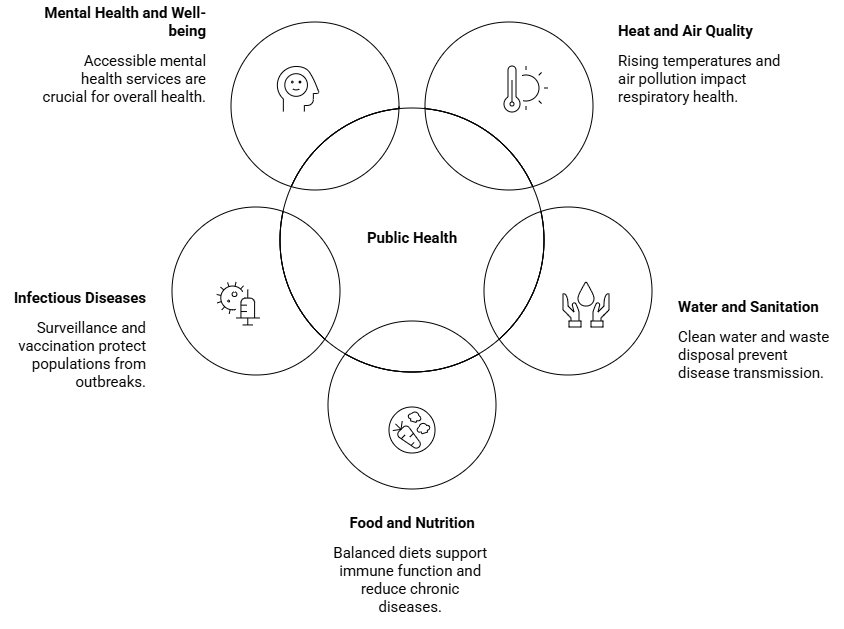
Urban areas face a complex and interlinked set of climate-sensitive health risks: Urban environments concentrate climate risks while simultaneously shaping how those risks translate into health outcomes. The interaction between built environments, population density, and socio-economic inequalities creates conditions where even moderate climatic changes can lead to significant health impacts. These risks are often interconnected, with one stressor amplifying another, leading to cascading effects across urban systems.
Figure : Climate-Health RisksImportantly, these impacts are not distributed evenly. Vulnerable populations, including those in informal settlements, the elderly, children, and low-income groups, face disproportionate exposure and limited capacity to adapt. Understanding these differentiated risks is essential for designing targeted and equitable interventions.
- Heat and Air Quality
Rising temperatures and urban heat island effects increase heat stress, cardiovascular illness, and mortality. Poor air quality exacerbates respiratory diseases.
Example: Prolonged heatwaves in cities such as Ahmedabad have led to spikes in heat-related mortality.
- Water and Sanitation
Flooding, water scarcity, and infrastructure stress threaten access to safe drinking water and sanitation, increasing disease risks.
Example: Urban flooding in Jakarta regularly contaminates drinking water sources.
Example: Water scarcity in Cape Town has threatened hygiene and public health systems.
- Food and Nutrition
Disruptions in food supply chains affect availability, affordability, and nutritional quality, particularly for vulnerable populations.
Example: Supply chain disruptions during extreme weather events in Manila affect food availability and prices.
Example: Urban poor communities in Nairobi face rising malnutrition linked to climate variability.
- Infectious Diseases
Changing climate conditions influence the spread of vector-borne and water-borne diseases.
Example: Expansion of dengue transmission zones in Bangkok due to changing climate patterns.
Example: Flood-related outbreaks of water-borne diseases in Dhaka
- Mental Health and Well-being
Climate anxiety, displacement, and disaster-related trauma are emerging as critical urban health concerns.
Example: Rising climate anxiety among urban youth in Tokyo.
These risks are not evenly distributed. Informal settlements and marginalized communities experience disproportionate exposure and limited adaptive capacity. The interconnected risks highlight the need for a shift from fragmented sectoral responses to integrated, systems-based urban policies. Cities must adopt approaches that combine public health, urban planning, environmental management, and social protection. Policy responses should prioritize vulnerable populations, strengthen preventive measures, and embed climate considerations into all aspects of urban governance, ensuring that resilience-building efforts are both inclusive and evidence-based.
3. Urban Health Systems Under Stress
Urban health systems are increasingly under pressure from both climate impacts and their own environmental footprint. Urban health systems are increasingly operating under conditions of uncertainty and strain driven by climate change. Rising temperatures, extreme weather events, and shifting disease patterns are increasing the demand for health services while simultaneously disrupting the infrastructure and systems that provide them. This dual pressure exposes structural weaknesses in urban health systems and highlights the urgency of building resilience.Health infrastructure in many cities is not designed to withstand climate extremes. Hospitals and clinics may be located in flood-prone areas, lack adequate cooling systems, or depend on unstable energy supplies. At the same time, the health workforce faces growing challenges, including increased workloads, new disease burdens, and the need for specialized knowledge related to climate-sensitive health risks.
In addition, urban health systems contribute to environmental degradation through energy use, procurement practices, and waste generation. This creates a paradox where the sector responsible for protecting health also contributes to the underlying drivers of climate change. Addressing this requires a transition toward systems that are both climate-resilient and environmentally sustainable, balancing immediate healthcare needs with long-term planetary health considerations.
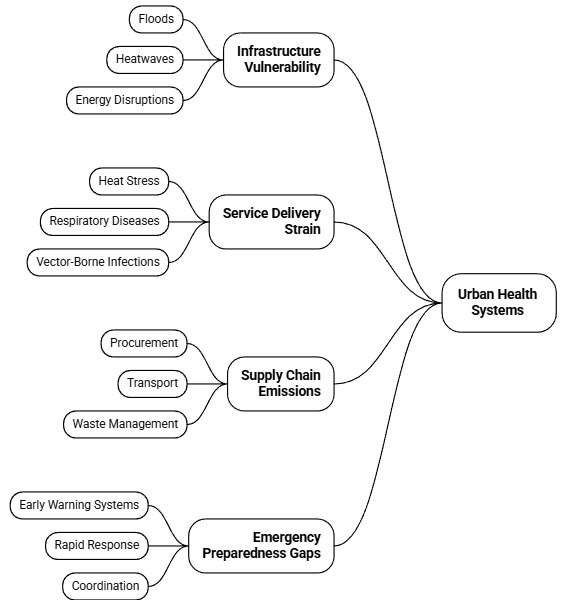
Key Stress Points in Urban Health Systems
Figure : Key Stress Points in Urban Health Systems
- Infrastructure Vulnerability
Hospitals and clinics face risks from floods, heatwaves, and energy disruptions. Many health facilities are located in high-risk zones such as floodplains or densely built urban areas with limited ventilation and cooling capacity. Aging infrastructure, inadequate drainage, and dependence on unstable power grids further increase vulnerability. Disruptions to electricity and water supply can compromise critical services, including emergency care, surgeries, and cold-chain storage for medicines and vaccines.- Service Delivery Strain
Increased disease burdens challenge already stretched systems. Climate-sensitive illnesses such as heat stress, respiratory diseases, and vector-borne infections are adding to existing public health challenges. This leads to overcrowded facilities, longer waiting times, and increased pressure on healthcare workers. In many cities, health systems must respond simultaneously to acute shocks, such as disasters, and slow-onset stresses, such as rising chronic disease linked to environmental conditions.- Supply Chain Emissions
Procurement, transport, and waste management contribute to greenhouse gas emissions. Urban health systems rely on complex supply chains for pharmaceuticals, medical equipment, food, and other essential inputs, many of which are carbon-intensive. Transportation of goods, energy use in storage, and disposal of medical waste all add to the environmental footprint. At the same time, disruptions caused by extreme weather events can interrupt supply chains, affecting the availability of critical medical supplies.- Emergency Preparedness Gaps
Many cities lack integrated systems for early warning and rapid response. Coordination between health services, meteorological agencies, and disaster management authorities is often limited or fragmented. Early warning systems for heatwaves, floods, or disease outbreaks may exist but are not always effectively linked to health system responses. As a result, cities may struggle to respond in a timely and coordinated manner, leading to preventable health impacts and higher mortality during climate-related emergencies. This dual role, as both responders to and contributors of climate change, necessitates a transformation toward low-carbon, climate-resilient health systems.
4. Reimagining Healthy Cities: A Climate-Resilient Approach
Reframing Healthy Cities in the context of climate change requires a shift from reactive service delivery to proactive system design. Cities must anticipate risks, reduce vulnerabilities, and enhance adaptive capacity across all components of the urban health system. This involves integrating physical infrastructure, institutional systems, community engagement, and environmental management into a coherent framework.At the core of this approach is the recognition that health outcomes are shaped by a wide range of urban determinants, including housing, transport, energy, water, and food systems. A climate-resilient Healthy City is therefore one that aligns these sectors toward shared goals of sustainability, resilience, and equity.
The five pillars outlined below provide a structured approach for operationalizing this vision:
Together, these pillars represent a shift toward preventive, adaptive, and systems-oriented urban health governance.
- Climate-resilient health infrastructure ensures continuity of care during extreme events.
- Low-carbon health systems reduce environmental impact while maintaining service quality.
- Integrated data systems enable timely and informed decision-making.
- Community-based adaptation strengthens local capacity and ownership.
- Nature-based solutions provide cost-effective and multifunctional benefits for health and resilience.
Pillar 1
Climate-Resilient Health InfrastructurePillar 2
Low-Carbon Urban Health SystemsPillar 3
Integrated Data and Early Warning SystemsPillar 4
Community-Based AdaptationPillar 5
Nature-Based and Preventive Solutions
- Climate-proofing hospitals and clinics
- Ensuring reliable energy and water systems
- Designing facilities for extreme weather conditions
- Reducing emissions from healthcare operations
- Sustainable procurement and supply chains
- Efficient waste management systems
- Linking climate and health data
- Real-time monitoring of risks
- Predictive systems for disease outbreaks
- Strengthening local health networks
- Engaging communities in preparedness
- Promoting behavioral change and awareness
- Urban green spaces to reduce heat
- Blue infrastructure for water management
- Preventive health strategies linked to environmental design
5. Governance and Policy Integration
Reframing Healthy Cities in the context of climate change requires a shift from reactive service delivery to proactive system design. Cities must anticipate risks, reduce vulnerabilities, and enhance adaptive capacity across all components of the urban health system. This involves integrating physical infrastructure, institutional systems, community engagement, and environmental management into a coherent framework.At the core of this approach is the recognition that health outcomes are shaped by a wide range of urban determinants, including housing, transport, energy, water, and food systems. A climate-resilient Healthy City is therefore one that aligns these sectors toward shared goals of sustainability, resilience, and equity.
The five pillars outlined in the above table provide a structured approach for operationalizing this vision:
- Climate-resilient health infrastructure ensures continuity of care during extreme events.
- Low-carbon health systems reduce environmental impact while maintaining service quality.
- Integrated data systems enable timely and informed decision-making.
- Community-based adaptation strengthens local capacity and ownership.
- Nature-based solutions provide cost-effective and multifunctional benefits for health and resilience.
Together, these pillars represent a shift toward preventive, adaptive, and systems-oriented urban health governance - Health in All Policies would require embedding health considerations across urban planning, transport, housing, and energy sectors.
WHO's "One Health Approach" would need recognizing interconnections between human, animal, and environmental health and multi-level Governance would require aligning city-level actions with national policies and global frameworks. A number of financing mechanisms will need to be put in place which could mobilize resources for climate-resilient health systems, particularly in developing countries. These mechanisms will also need to incorporate equity and inclusion in their structure, ensuring vulnerable groups are prioritized in planning and decision-making
Conclusion
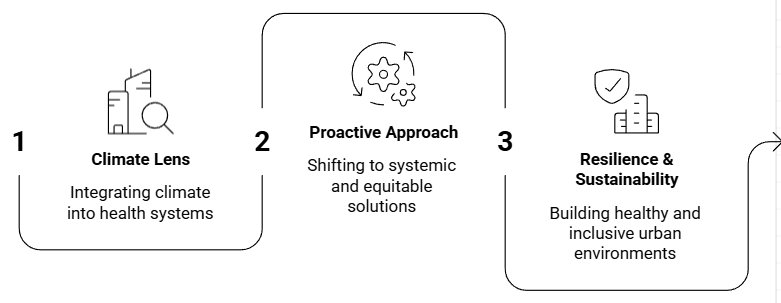
⮕ The convergence of climate change and public health presents both a profound challenge and an opportunity. Cities, as dynamic hubs of innovation and governance, can lead this transformation. ⮕ Reframing Healthy Cities through a climate lens enables a shift from reactive responses to proactive, systemic, and equitable approaches. By integrating resilience, sustainability, and inclusiveness into urban health systems, cities can safeguard the well-being of current and future generations.
Figure : Transforming Cities for Climate and HealthThe convergence of climate change and public health represents not only a profound and escalating challenge, but also a critical inflection point for rethinking how cities are planned, governed, and sustained. Urban areas are no longer passive recipients of climate impacts; they are active arenas where risks are concentrated, inequalities are exposed, and solutions can be rapidly tested and scaled. As emphasized in recent global policy directions led by the World Health Organization, the health sector must move beyond reactive responses and become a central driver of climate action.
Reframing the Healthy Cities agenda through a climate lens enables a transition toward anticipatory, systems-based, and equity-centered approaches. This means not only strengthening healthcare delivery, but also addressing the broader determinants of health embedded in urban systems such as housing, transport, energy, water, and food. By integrating resilience and sustainability into these interconnected domains, cities can reduce vulnerability while generating co-benefits for health, environment, and economic well-being.
Importantly, this transformation requires a shift in mindset as much as in practice. It calls for breaking down institutional silos, fostering cross-sector collaboration, and embedding health considerations into all aspects of urban policy and planning. It also demands that equity remain at the forefront, ensuring that those most vulnerable to climate risks are prioritized in both decision-making and resource allocation.
Ultimately, climate-resilient Healthy Cities are not just about adapting to future risks, but about shaping a more just, sustainable, and health-promoting urban future. By acting decisively at the local level while aligning with global commitments such as the Paris Agreement, cities can play a transformative role in safeguarding the well-being of current and future generations.
ANNEX: Climate-Health Action Toolkit for CitiesPolicy and PlanningSystems and InfrastructureCapacity BuildingCommunity EngagementMonitoring and IndicatorsEach card provides a key tool for integrating climate and health in cities.
Policy & PlanningClimate-Health Risk AssessmentsIdentify vulnerabilities to guide targeted interventions.Includes mapping heat zones, flood risks, and health exposure patterns across different population groups.Policy & PlanningUrban Resilience StrategiesIntegrate climate risks across urban systems.Aligns infrastructure, health, water, and land use planning under a unified resilience framework.Policy & PlanningHealth-Inclusive Climate PlansEmbed health into climate policies.Ensures mitigation and adaptation actions generate measurable public health co-benefits.Systems & InfrastructureResilient Healthcare FacilitiesEnsure facilities withstand climate shocks.Includes flood-proofing, backup energy systems, and climate-adaptive building design.Systems & InfrastructureEarly Warning SystemsLink climate data with health response.Supports timely alerts for heatwaves, floods, and disease outbreaks with coordinated response protocols.Capacity BuildingTraining Health ProfessionalsBuild climate-health competencies.Focuses on diagnosis, prevention, and emergency response for climate-sensitive diseases.Capacity BuildingCross-Sector PlatformsEnable coordinated decision-making.Brings together health, planning, environment, and disaster management actors.Community EngagementPublic Awareness CampaignsPromote risk awareness and behavior change.Encourages heat protection, water safety, and preventive health practices.Community EngagementParticipatory PlanningEngage communities in decision-making.Ensures solutions reflect local realities and prioritize vulnerable populations.Monitoring & IndicatorsVulnerability IndicesTrack exposure and resilience.Combines social, environmental, and health data into actionable metrics.Monitoring & IndicatorsEmissions TrackingMeasure healthcare carbon footprint.Supports transition toward low-carbon and sustainable health systems.Monitoring & IndicatorsAccess & Equity MetricsMonitor inclusiveness of interventions.Tracks disparities to ensure no group is left behind in climate-health responses.
This work by GDRC is licensed under a Creative Commons Attribution-ShareAlike 4.0 International License. You are free to share and adapt this piece of work for your own purposes, as long as it is appropriately citied. . More info: http://creativecommons.org/licenses/by-sa/4.0/
on




|
Return to Healthy Cities Contact: Hari Srinivas - [email protected] |