|
|
 |
Hari Srinivas |
|
Concept Note Series E-025. June 2015.
|
Abstract:
The Precautionary Principle is presented as a foundational approach to environmental decision-making and community-based disaster management, emphasizing proactive action in the face of uncertainty. The document argues that lack of full scientific certainty should not delay measures to prevent potentially serious or irreversible environmental harm.
It outlines key dimensions of the principle, including preventative anticipation, safeguarding ecological limits, proportionality of response, duty of care, and recognition of ecological rights and past environmental debts.
By linking these dimensions to community-based disaster management, the paper highlights the importance of forward-looking, inclusive, and ethically grounded decision-making processes that prioritize long-term sustainability, risk reduction, and intergenerational equity.
|
Keywords:
Precautionary Principle, environmental decision-making, community-based disaster management, risk and uncertainty, preventive action, ecological sustainability, duty of care, intergenerational equity
|

1. Introduction: Acting Under Uncertainty
Modern environmental and disaster risks are increasingly complex, uncertain, and potentially irreversible. From climate change and biodiversity loss to technological hazards and urban vulnerabilities, decision-makers are often required to act in situations where scientific knowledge is incomplete or evolving.
The precautionary principle provides a guiding framework for such contexts. It asserts that the absence of full scientific certainty should not be used as a reason to delay measures that prevent environmental degradation or protect human well-being. Rather than waiting for conclusive evidence, it promotes anticipatory action in the face of plausible risk.
In disaster and environmental management, this principle shifts the focus from reactive responses to preventive and forward-looking governance, emphasizing responsibility, care, and long-term resilience.
|
|
|
|
|
What is Resilience?
Resilience refers to the ability of individuals, communities, and systems to anticipate, absorb, adapt to, and recover from shocks and stresses. In disaster management, resilience emphasizes:
- Preparedness before disasters
- Capacity to cope during crises
- Ability to rebuild and adapt afterward
Precaution strengthens resilience by reducing exposure to uncertain risks before they materialize.
|
|
|
|
|
|
2. Origins and Evolution of the Precautionary Principle
The precautionary principle emerged in the 1970s in Germany as the Vorsorgeprinzip (foresight or precaution principle), initially applied to environmental protection policies. It gained international recognition through its inclusion in major global frameworks, most notably:
- Principle 15 of the Rio Declaration on Environment and Development (1992)
- European Union environmental law and regulatory frameworks
- International agreements on climate change, biodiversity, and chemical safety
Its evolution reflects growing awareness that:
- Environmental systems are complex and not fully predictable
- Delayed action can lead to irreversible damage
- Scientific uncertainty is inherent in many global challenges
Today, the precautionary principle is widely regarded as a core principle of sustainable development and environmental governance.
|
| |
| | |
The precautionary principle is a decision-making approach that advocates taking preventive action in the face of uncertainty. It holds that lack of full scientific certainty should not delay measures to avoid serious or irreversible harm to human health or the environment.
It shifts the focus from reacting to damage toward anticipating and preventing risk.
.
| |
|
| | |
3. Core Elements of the Precautionary Principle
The precautionary principle can be understood through six interrelated elements:
- Preventative Anticipation: Action should be taken in advance of scientific certainty when there is credible evidence of potential harm.
- Safeguarding Ecological Limits: Human activities must operate within the carrying capacity and resilience of ecological systems.
- Proportionality of Response: Measures taken should be proportionate to the potential scale and seriousness of harm.
- Duty of Care and Burden of Proof: Responsibility lies with those proposing potentially harmful activities to demonstrate safety, rather than with society to prove harm.
- Intergenerational Equity and Intrinsic Rights: Future generations and non-human life forms have inherent rights that must be respected and protected.
- Ecological Debt and Responsibility: Those who contribute to environmental degradation bear responsibility for mitigation, restoration, and compensation.
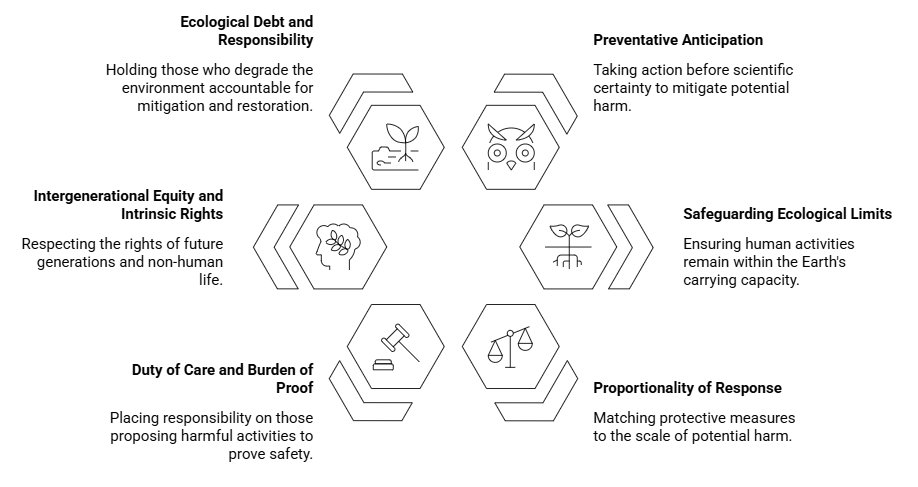 Figure 1: Foundations of the Precautionary Principle
Together, these elements provide a normative and operational framework for responsible decision-making under uncertainty.
| Case Study 1: Fukushima Nuclear Disaster and Energy Policy Reform (Japan) |
|
The Fukushima Daiichi nuclear disaster highlighted the consequences of underestimating low-probability but high-impact risks. Prior to the disaster, safety assumptions did not fully account for extreme tsunami scenarios, despite some scientific warnings.
In the aftermath, Japan adopted more precautionary approaches, including stricter regulatory standards, enhanced risk assessments, and a temporary shutdown of nuclear power plants. The disaster also accelerated investments in renewable energy and decentralized energy systems.
Precautionary Insight:
Failure to act on early warnings can lead to irreversible consequences. Precaution requires planning for worst-case scenarios, even when their probability is uncertain.
|
4. Precaution and Risk Management: Key Distinctions
The precautionary principle complements, but differs from, conventional risk management approaches.
- Risk-based approaches rely on quantifiable evidence and often act after risks are clearly established.
- Precautionary approaches prioritize early action when risks are uncertain but potentially severe or irreversible.
|
| |
| |
Precaution vs Prevention
While often used together, precaution and prevention are distinct:
- Prevention addresses risks that are well understood and measurable
- Precaution addresses risks that are uncertain but potentially severe
In practice, precaution extends preventive thinking into areas of scientific uncertainty.
.
| |
|
| | |
Precaution does not reject science. Instead, it recognizes the limits of scientific certainty and integrates ethical considerations, societal values, and long-term impacts into decision-making.
It is particularly relevant in situations characterized by high uncertainty. potential for irreversible damage, and large-scale or systemic impacts. In this sense, precaution represents a more adaptive and resilience-oriented approach to governance.
5. Applications in Community-Based Disaster Management (CBDM)
What is Community-Based Disaster Risk Management (CBDRM)?
Community-Based Disaster Risk Management (CBDRM) is an approach that places local communities at the center of disaster risk reduction. It recognizes that communities are not just victims of disasters, but key actors with knowledge, capacities, and agency.
CBDRM involves:
- Participatory risk assessment and planning
- Use of local and indigenous knowledge
- Community-led preparedness and response
- Strengthening local institutions and networks
By focusing on local realities and inclusive decision-making, CBDRM enhances resilience and ensures that risk reduction measures are context-specific, equitable, and sustainable.
Link to Precaution:
CBDRM naturally aligns with the precautionary principle by encouraging early action based on local knowledge and lived experience, even when scientific data is limited.
|
The precautionary principle is highly relevant to Community-Based Disaster Management (CBDM), where decisions must often be made with incomplete data but significant local consequences.
- Early Warning and Preparedness: Communities act on emerging signals and local knowledge, even when scientific predictions are not definitive.
- Land-Use Planning: Avoiding development in hazard-prone areas such as floodplains, coastal zones, or unstable slopes, despite uncertainty in risk projections.
- Infrastructure Design: Building infrastructure that exceeds minimum safety standards to account for uncertain future risks, including climate variability.
- Integration of Local Knowledge: Recognizing community observations, traditional practices, and indigenous knowledge as valid early indicators of environmental change.
|
| |
| |
What is Adaptive Management?
Adaptive management is a flexible approach to decision-making that treats policies and actions as learning processes.
It involves acting despite uncertainty, monitoring outcomes and adjusting strategies based on new knowledge
This approach complements the precautionary principle by allowing decisions to evolve over time rather than waiting for complete certainty.
.
| |
|
| | |
- 5. Climate Change Adaptation: Implementing adaptive measures such as water conservation, ecosystem restoration, and diversified livelihoods before impacts fully materialize.
- 6. Urban Risk Reduction: Designing cities with redundancy, flexibility, and safety margins to absorb shocks and stresses.
Through these applications, the precautionary principle strengthens local resilience, participatory governance, and proactive risk reduction.
| Case Study 2: European Union REACH Regulation (Chemical Safety) |
|
The European Union's REACH Regulation embodies the precautionary principle by shifting the burden of proof onto industry. Companies must demonstrate that chemicals are safe before they can be marketed.
This approach emerged from concerns about long-term health and environmental impacts of chemical exposure, many of which were not fully understood at the time of regulation.
Precautionary Insight:
When scientific knowledge is incomplete, regulatory systems can require proof of safety rather than waiting for evidence of harm.
|
6. Challenges, Critiques, and Trade-offs
While widely accepted, the precautionary principle raises important practical and conceptual challenges:
- Perceived Constraints on Innovation: Precautionary measures may be viewed as limiting technological development or economic growth, particularly when regulations delay the introduction of new products or processes that could also bring benefits.
- Ambiguity in Application:
The principle is often broadly defined, which can lead to differing interpretations regarding when and how it should be applied, resulting in inconsistent policy decisions across sectors and regions.
- Risk of Overreach: In some cases, excessive caution may lead to overly restrictive measures, diverting resources from more immediate or clearly defined risks and potentially creating unintended consequences.
- Political and Institutional Misuse: The principle can be selectively invoked to justify predetermined decisions, including protectionist policies or the avoidance of politically sensitive choices, rather than being applied objectively.
Despite these concerns, the precautionary principle remains a valuable tool when applied carefully. Its effectiveness depends on ensuring that measures are:
- Proportionate and evidence-informed
Actions should be based on the best available knowledge and scaled appropriately to the level of potential risk.
- Transparent and participatory
Decision-making processes should involve stakeholders and clearly communicate the rationale for precautionary actions.
- Adaptive and revisable
Policies should be regularly reviewed and adjusted as new scientific evidence and practical experience emerge.
Importantly, the principle does not advocate eliminating all risks, but rather managing uncertainty responsibly.
7. Operationalizing the Precautionary Principle
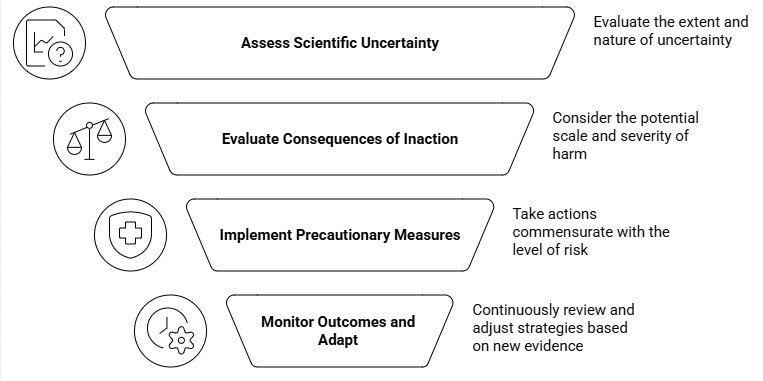 Figure 2 : "Implementation Funnel" of the Precautionary Principle
To translate the precautionary principle into practice, decision-makers can adopt a simple framework:
- Identify potential risks and sources of harm:
This involves recognizing possible environmental, technological, or social threats, including those that are not yet fully understood but could have significant consequences.
- Assess the level of scientific uncertainty:
Decision-makers evaluate the extent and nature of uncertainty, acknowledging gaps in data, limits of models, and differing expert opinions.
- Evaluate the consequences of inaction:
This step considers the potential scale, severity, and irreversibility of harm if no action is taken, including impacts on vulnerable populations and future generations.
- Implement proportionate precautionary measures:
Actions are taken that are commensurate with the level of risk, balancing caution with practicality, and may include regulatory, technological, or behavioral interventions.
- Monitor outcomes and adapt strategies over time:
Policies and actions are continuously reviewed based on new evidence and changing conditions, allowing for adjustments and improvements as knowledge evolves.
This iterative process supports adaptive management, enabling policies and actions to evolve as new knowledge becomes available.
| Case Study 3: Coastal Zone Management and Climate Adaptation (Global) |
|
In many coastal cities worldwide, including regions in Bangladesh and small island states, sea-level rise and extreme weather events pose uncertain but severe risks. Governments and communities have implemented precautionary measures such as mangrove restoration, setback zones, and elevated housing.
These actions are often taken despite uncertainties in the exact timing and magnitude of climate impacts.
Precautionary Insight:
Early, low-regret adaptation measures can reduce vulnerability and enhance resilience, even when future risks cannot be precisely predicted.
|
|
| |
| |
What are "Low-Regret" Measures?
Low-regret measures are actions that provide benefits regardless of how future uncertainties unfold. Examples include improving water efficiency, protecting ecosystems or strengthening early warning systems . Such measures are central to precautionary approaches because they reduce risk without requiring precise predictions.
.
| |
|
| | |
8. Towards Preventive and Resilient Governance
The precautionary principle represents a fundamental shift from reactive to preventive approaches in disaster and environmental management. By emphasizing foresight, responsibility, and care, it aligns closely with the goals of sustainable development and resilience building.
In an era of increasing uncertainty and interconnected risks, the principle provides a critical foundation for inclusive, ethical, and forward-looking governance. Its integration into community-based and urban environmental management systems can significantly enhance the capacity to anticipate, avoid, and mitigate future crises.
|


