 |
The Informal Sector
Poverty alleviation and job creation - The dilemma of developing countries
Different sectors, common goals |
|
|
Poverty alleviation and job creation |
|
|
|
F |
 or many local and national governments in developing countries, the goal of poverty alleviation, coupled with job creation, remains a key for overall development. These challenges are exacerbated by an increasing proportion of its population that is migrating to cities and urbanized areas. or many local and national governments in developing countries, the goal of poverty alleviation, coupled with job creation, remains a key for overall development. These challenges are exacerbated by an increasing proportion of its population that is migrating to cities and urbanized areas.
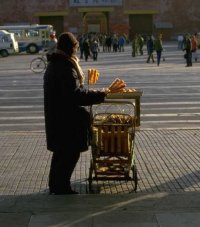
Amist a lack of action from governments, the informal sector thrives for precisely the same reason - to alleviate poverty and create jobs. How can we change our attitudes to the informal sector and understand its true contribution to developmental processes, even if transitionary? |
|
|
|
Employment Cushion:
During crises such as COVID-19, informal employment absorbed 70 percent of job losses in developing economies, acting as a critical shock absorber.
|
Income Inequality:
Informal workers earn on average 40 percent less than formal workers in similar occupations, deepening vulnerability even when employment is high.
|
Women's Share:
Globally, 58 percent of working women are informally employed, rising to 92 percent in South Asia, underscoring the sector's role in both empowerment and exploitation.
|
|